Pizza Informer recipe
Meat Lovers Pizza Recipe
Published January 30, 2023Last updated August 7, 2026
A 12-inch meat lovers pizza with pepperoni, sausage, bacon, and ham in controlled quantities, so the crust bakes through instead of disappearing beneath a greasy pile of toppings.
Jump to recipe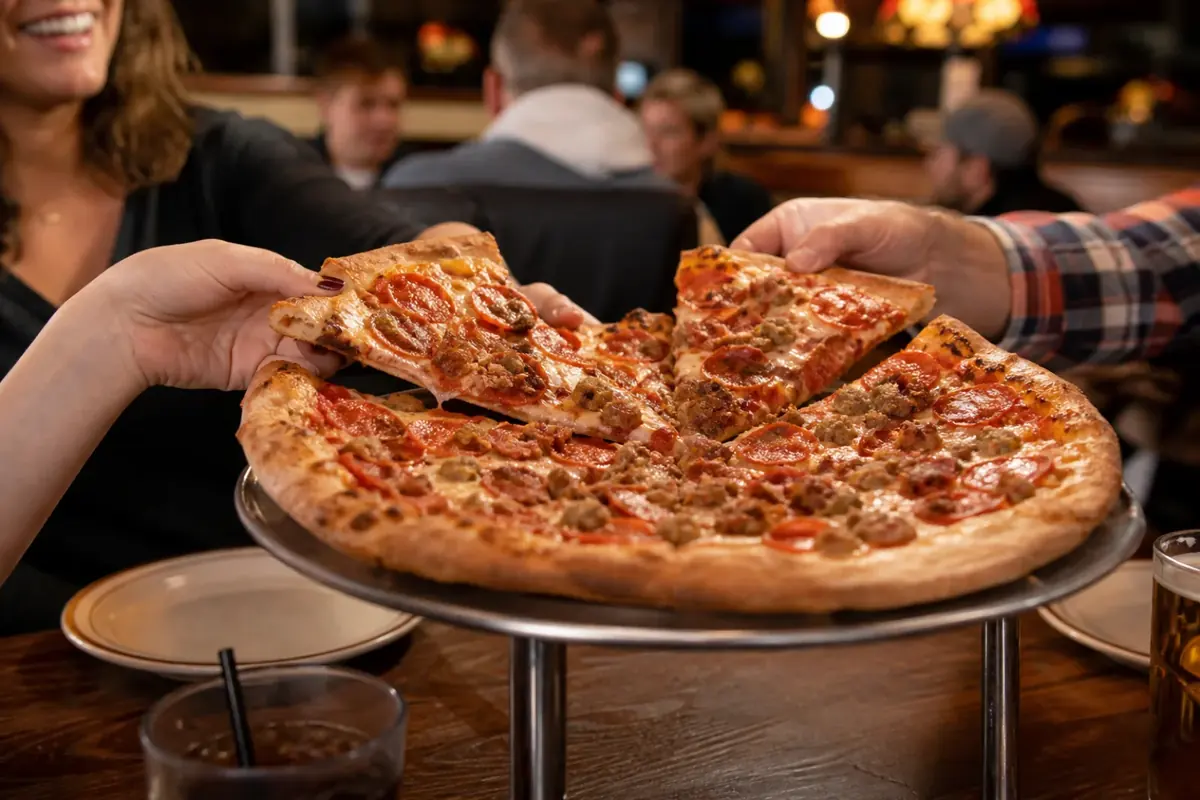
The key to a good meat lovers pizza is restraint. Four meats provide plenty of smoky, savory flavor, but each one contributes fat, salt, and weight. Keeping the total meat to about 4 ounces allows the dough to expand, the cheese to brown, and the center to become firm enough to slice cleanly.
This recipe uses fully cooked sausage, bacon, and ham because a short pizza bake is not a reliable way to cook raw meat safely. The cooked toppings should also be drained and cooled before assembly. That small preparation step reduces surface grease and prevents hot ingredients from softening the raw dough.
A pizza steel or stone produces the firmest underside in a conventional home oven, but an inverted heavy baking sheet is a workable substitute. Preheat whichever surface you use thoroughly; stored heat matters as much as the oven’s displayed temperature.
The recipe
Meat Lovers Pizza Recipe
Pizza
- 1 portion pizza dough, about 10 to 11 ounces (285 to 310 grams), at room temperature
- 1/3 cup thick pizza sauce
- 4 ounces low-moisture whole-milk or part-skim mozzarella, shredded
- 1 ounce sliced pepperoni, about 14 to 18 small slices
- 1 ounce fully cooked pork or beef Italian sausage, crumbled
- 1 ounce fully cooked bacon, drained and chopped
- 1 ounce fully cooked ham, cut into small strips or dice
- 1 teaspoon all-purpose flour or semolina, for the peel or parchment, as needed
Optional finishing ingredients
- 1 tablespoon finely grated Parmesan or Pecorino Romano
- Pinch of dried oregano or crushed red pepper
- A few small basil leaves, added after baking
Method
- Bring the dough to room temperature. Place the covered dough on the counter 60 to 90 minutes before shaping, depending on how cold and firm it is. It is ready when it feels relaxed, has expanded slightly, and does not immediately snap back when gently pressed. Keep it covered so the surface does not form a dry skin.
- Preheat the oven and baking surface. Place a pizza steel or stone on a rack in the upper-middle or lower-middle part of the oven, following the equipment manufacturer’s placement instructions. Heat the oven to 500°F, or its highest approved baking temperature, for at least 45 minutes. If using an inverted heavy baking sheet, preheat it for about 30 minutes. Do not place a cold stone into a hot oven, and do not exceed the rated temperature of your equipment.
- Prepare the meat toppings. Make sure the sausage, bacon, and ham are fully cooked before they go on the pizza. Blot pepperoni with a paper towel if it looks especially oily. Drain the cooked sausage and bacon well, then let all warm toppings cool. Break large sausage pieces into crumbles no wider than about 1/2 inch so they heat evenly and do not pull cheese from the slice.
- Set up for assembly. Lightly flour a pizza peel. If you are not comfortable launching raw dough from a peel, build the pizza on a sheet of parchment trimmed close to the dough. Parchment may darken at high heat, so follow its package temperature limit; if necessary, remove it from beneath the pizza after the crust has set for 2 to 3 minutes.
- Shape the dough. Set the dough on a lightly floured work surface and press from the center outward, leaving a 1/2- to 3/4-inch rim. Lift and gently stretch the dough over the backs of your hands until it measures about 12 inches across. Avoid crushing the rim. If the dough repeatedly contracts, cover it and let it rest for 10 minutes before continuing rather than forcing it and causing a tear.
- Add the sauce and cheese. Transfer the shaped dough to the prepared peel or parchment. Spread 1/3 cup sauce in a thin layer, stopping about 1/2 inch from the rim. Scatter the 4 ounces of mozzarella evenly over the sauce. Do not add extra sauce to cover bare spots; a light, uneven-looking coating is preferable to a wet center.
- Distribute the meats. Arrange the pepperoni, sausage, bacon, and ham evenly in a single loose layer. Leave small spaces where cheese and sauce remain visible. Avoid placing all four meats in the center, where moisture and rendered fat collect. If using Parmesan or Pecorino, sprinkle it lightly over the assembled pizza.
- Launch and bake. Give the peel a short shake to confirm that the dough moves. Loosen any stuck area with a bench scraper and a pinch of flour. Slide the pizza onto the hot steel, stone, or baking sheet. Bake for 7 to 11 minutes at 500°F, turning it once if the oven browns unevenly. Ovens set below 500°F may require 11 to 15 minutes.
- Check for doneness. Remove the pizza when the rim is expanded and well browned, the cheese is melted with scattered golden patches, and the underside is firm with brown spots rather than pale and soft. The center should not sag heavily when lifted with the peel. All previously cooked meat toppings should be steaming hot. If the top is done before the bottom, move the pizza to a lower rack for the final minute; if the bottom colors too quickly, move it higher.
- Rest, finish, and slice. Transfer the pizza to a wire rack for 2 minutes so steam can escape from the underside, then move it to a cutting board. Add oregano, crushed red pepper, or basil if desired. Cut into 6 slices and serve while the cheese is hot but no longer flowing into the cut lines.
Equipment and oven setup
Useful equipment includes a pizza steel or stone, a pizza peel or rimless baking sheet, a wheel cutter or rocker knife, a wire cooling rack, and an instant-read food thermometer if you are cooking sausage from raw. A bench scraper is helpful for releasing dough that sticks to the peel.
A steel transfers heat rapidly and usually creates a darker, firmer bottom in a home oven. A stone heats more gently and may be less likely to scorch flour beneath the pizza. An inverted heavy baking sheet holds less heat than either one, but it works if it receives a full preheat. A regular cold sheet pan can also be used, though the finished crust will generally be softer and the bake may take several minutes longer.
Use only equipment approved for the selected temperature. Some parchment paper, nonstick pans, stones, and insulated baking sheets have lower maximum-temperature limits. The oven’s highest setting is not automatically safe for every accessory.
- Preheat a steel or stone for at least 45 minutes at 500°F.
- Preheat an inverted heavy baking sheet for about 30 minutes.
- Position the baking surface where both the crust and cheese can brown without burning.
- Use the broiler only if your stone, steel, parchment, and oven instructions permit it.
Why controlled topping quantities matter
Pepperoni, sausage, bacon, and ham all release some combination of fat and moisture as they heat. Excess topping can insulate the sauce and dough from the oven, leaving the center limp even when the exposed rim is brown. It can also produce enough rendered fat to pool on the cheese.
One ounce of each meat gives every slice a mix of toppings without turning the pizza into a casserole. Chopping the bacon and ham into small pieces and using modest sausage crumbles improves distribution. Thin pepperoni cups or curls more readily, while thicker slices tend to remain flatter and chewier; either works if the total quantity stays close to 1 ounce.
Low-moisture mozzarella is useful here because it releases less water than fresh mozzarella. Whole-milk cheese generally melts more richly, while part-skim mozzarella tends to brown and hold its shape a little more. Pre-shredded cheese can be used, although anti-caking starch may make the melt look drier.
- Drain cooked sausage and bacon before weighing or measuring them.
- Cool hot meat before placing it on raw dough.
- Keep the center lightly topped and avoid overlapping thick piles of meat.
- Use a thick pizza sauce rather than a watery tomato purée.
Cooking the sausage safely
If you begin with raw pork or beef sausage, cook it completely in a skillet before assembling the pizza. Break it into small crumbles and check the thickest pieces with a food thermometer. USDA guidance sets 160°F as the safe minimum internal temperature for ground beef, pork, lamb, and veal. Sausage made from chicken or turkey should reach 165°F.
Do not partially brown raw sausage with the intention of finishing it later on the pizza. Cook it through, transfer it away from the plate and utensils that held it raw, drain the rendered fat, and let it cool. Wash your hands with soap and water after handling raw meat, and clean the knife, board, thermometer probe, and work surface before they touch cheese or other ready-to-eat ingredients.
Pepperoni and packaged ham are commonly sold ready to eat, but labels vary. Check the package rather than relying on appearance. Bacon should be cooked before it is added because the pizza’s short baking time may not cook raw strips evenly, especially when they are covered by cheese or other toppings.
- Ground pork or beef sausage: cook to 160°F.
- Ground chicken or turkey sausage: cook to 165°F.
- Use separate plates and tools for raw and cooked meat.
- Wash the thermometer probe after checking raw or partially cooked food.
Substitutions and topping adjustments
You can replace any of the four meats without changing the overall method, but keep the combined cooked-meat weight near 4 ounces. For example, substitute cooked meatballs for the sausage, Canadian bacon for the ham, or cooked salami for some of the pepperoni. Slice dense meats thinly so they heat through during the brief bake.
For a spicier pizza, use hot Italian sausage or add crushed red pepper after baking. For less salt, choose lower-sodium ham, reduce the pepperoni, and skip the Parmesan. Salt levels vary substantially among processed meats, so taste a small piece of each cooked topping before deciding whether the pizza needs a salty finishing cheese.
A dairy-free melting cheese can replace mozzarella, but browning and melting behavior differ by product. A gluten-free dough may require parchment or a pan because many formulas are too delicate to launch directly. Follow the dough recipe’s shaping and baking instructions while retaining the same restrained topping quantities.
For a lighter meat combination, use two or three varieties rather than shrinking every portion into tiny scattered pieces. Two ounces of sausage and one ounce each of pepperoni and ham, for example, will taste more deliberate than four barely detectable toppings.
- Keep total cooked meat near 4 ounces for a 12-inch pizza.
- Replace pork products with cooked beef, turkey, or chicken alternatives if preferred.
- Check labels for wheat, milk, soy, egg, or other ingredients in processed meats and meat substitutes.
- Avoid adding wet vegetables unless they have been cooked or thoroughly drained.
Troubleshooting meat lovers pizza
A pale, floppy underside usually points to insufficient preheating, a baking surface that does not retain much heat, or too much sauce and topping. Continue baking on a lower rack if the cheese can tolerate more heat. Next time, preheat longer and confirm that the stretched dough is no larger than 12 inches for the stated quantities.
If grease pools on top, carefully touch the surface with the corner of a folded paper towel after baking, keeping your fingers away from hot cheese. For the next pizza, blot the pepperoni, drain the sausage and bacon more thoroughly, or reduce the fattiest topping by 1/2 ounce. Adding more cheese will not absorb the grease and may worsen the problem.
If the crust tears during shaping, patch a small hole by pinching the surrounding dough together. A dough that tears repeatedly may be too cold, too dry, or stretched too aggressively. Let it rest, covered, for 10 minutes. Do not knead extra flour into a finished dough merely because its surface feels tacky.
A pizza that sticks to the peel has usually sat too long after assembly or landed on a damp, under-floured area. Work promptly once the sauce touches the dough. Shake the peel after adding the sauce, again after adding cheese, and once more before launching. Parchment is the simplest fallback when a clean launch matters more than direct contact with the baking surface.
- Pale bottom: bake longer or preheat the surface more thoroughly.
- Burned bottom: use less loose flour and move the baking surface higher.
- Wet center: reduce sauce, cool toppings, and leave more open space.
- Dense rim: press the center outward without flattening the outer edge.
- Toppings slide off: rest 2 minutes before cutting and use smaller meat pieces.
Storage and reheating
Refrigerate leftover pizza within 2 hours of baking, or within 1 hour if it has been held in temperatures above 90°F. Store slices in a shallow airtight container or wrap them tightly. USDA guidance recommends using refrigerated leftovers within 3 to 4 days. Frozen leftovers retain their best quality when protected from air; separating slices with parchment makes it easier to remove only what you need.
For a crisp base, reheat slices in a covered skillet over medium-low heat for 4 to 7 minutes. Add a few drops of water beside, not on, the pizza during the final minute and replace the lid so steam warms the toppings. A 375°F oven or toaster oven takes about 7 to 12 minutes. Time varies with slice thickness and whether the pizza starts refrigerator-cold or frozen.
USDA guidance calls for reheating leftovers to 165°F. Check near the center of the meat-topped portion with an instant-read thermometer, particularly when reheating several slices together. A microwave works quickly but softens the crust; placing the slice on a microwave-safe plate and heating in short intervals helps prevent the cheese from overheating before the center is hot.
- Refrigerate promptly and use within 3 to 4 days.
- Freeze tightly wrapped slices for longer storage.
- Reheat leftovers to 165°F.
- Discard pizza left at room temperature beyond the recommended time limits.
Serving and pairing ideas
This pizza is rich, salty, and heavily seasoned, so side dishes are most useful when they add acidity or crunch rather than more cheese or cured meat. A green salad with a sharp vinaigrette, sliced raw fennel with lemon, or roasted broccoli provides contrast without competing with the toppings.
Cut the pizza into six slices for a conventional serving or eight narrower slices when it is part of a larger spread. Letting the pie stand briefly before cutting keeps the cheese and small meat pieces from being dragged across the surface by the wheel.
- Serve with a crisp salad dressed with vinegar or lemon.
- Offer crushed red pepper at the table instead of adding it to the whole pizza.
- Pair with roasted vegetables that are not heavily salted or sauced.
Recipe questions
Questions about this recipe
Can raw sausage cook completely on the pizza?
Do not rely on the short pizza bake to cook raw sausage safely. Cook pork or beef sausage to 160°F, or poultry sausage to 165°F, before it touches the dough. Drain and cool it before assembly.
How much meat should go on a 12-inch pizza?
About 4 ounces of cooked meat is a practical target for this recipe. It provides generous coverage while leaving enough exposed cheese and dough for heat to circulate. Heavier topping loads may require a thicker crust, a pan-style method, or a longer bake.
Can I make the toppings ahead?
Yes. Cook the sausage and bacon, drain them, cool them promptly, and refrigerate them in separate covered containers. Dice the ham ahead as well. Assemble the pizza only when the oven and baking surface are fully preheated so the sauce does not soak into the dough.
Why is my meat lovers pizza watery?
Common causes include thin sauce, fresh mozzarella, hot sausage added directly from the skillet, inadequately drained bacon, and toppings piled densely in the center. Use low-moisture cheese, cool the cooked meats, and keep the topping layer loose.
Can I bake this pizza on a regular sheet pan?
Yes. Lightly oil a sheet pan, stretch or press the dough on it, and add the toppings. Bake at 475°F to 500°F as the pan manufacturer permits, usually for 12 to 17 minutes. Expect a softer base than a pizza baked on a fully preheated steel or stone.
Does this recipe contain common allergens?
The standard recipe contains wheat and milk. Processed meats, sauces, doughs, and cheese substitutes may contain or contact soy, egg, mustard, sesame, or other allergens. Read every package label when cooking for someone with an allergy.
Sources and further reading