Pizza Informer recipe
Artichoke and Olive Pizza
Published January 31, 2023Last updated August 7, 2026
A 12-inch tomato pizza with briny olives, tender artichoke hearts, mozzarella, lemon zest, and practical moisture and salt control.
Jump to recipe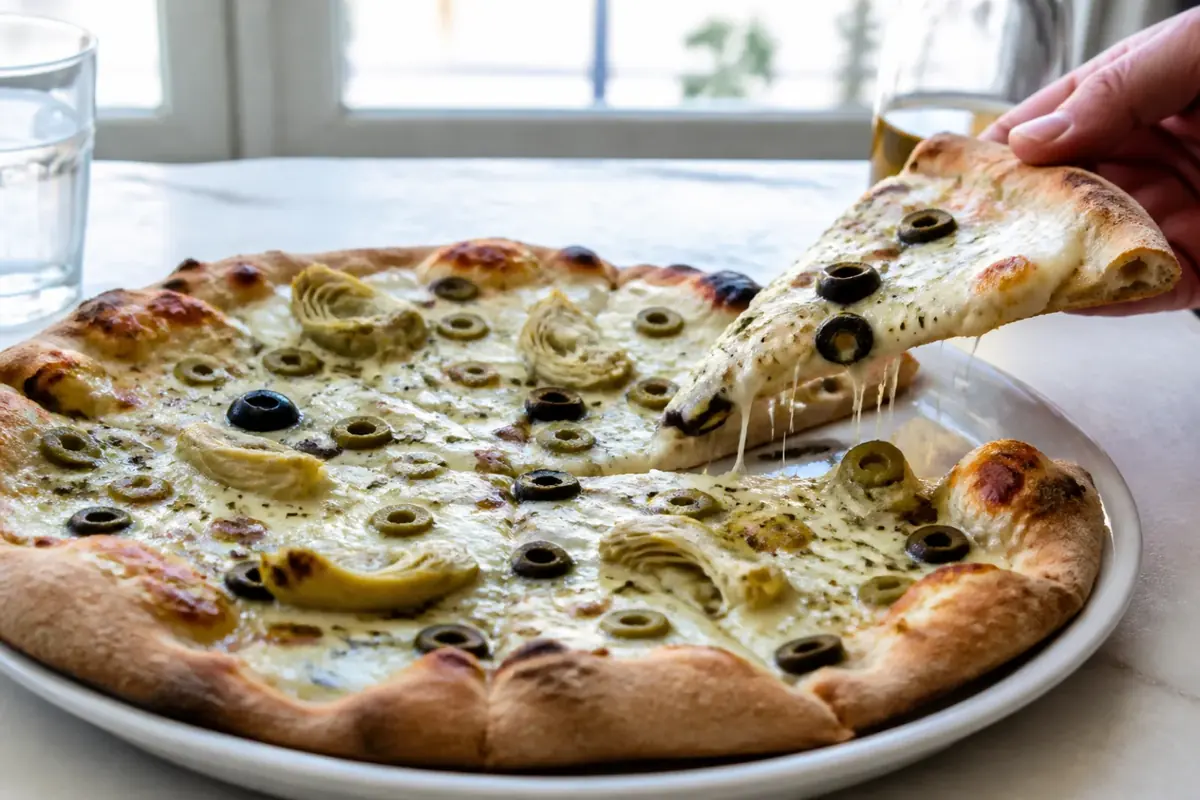
Artichoke and olive pizza works best when the toppings are treated as concentrated accents rather than piled on like salad. Both ingredients arrive packed in liquid, and olives contribute substantial salt. Draining them thoroughly keeps the center of the pizza firm; tasting them before assembly helps you decide whether they need a quick rinse.
This recipe uses low-moisture mozzarella and a modest 1/3 cup of tomato sauce. That combination leaves room for the artichokes to soften and brown without surrounding them with excess water. Lemon zest and parsley go on after baking, where they sharpen the preserved flavors without adding more salt.
The method includes directions for a stone or steel as well as an inverted baking sheet. A well-preheated stone or steel produces a crisper underside, but the sheet-pan method still makes a structurally sound pizza when the dough is stretched evenly and the toppings stay light.
The recipe
Artichoke and Olive Pizza
Pizza
- 1 pound (454 grams) prepared pizza dough, one portion for a 12-inch pizza
- 1 to 2 tablespoons all-purpose flour, semolina, or fine cornmeal, for dusting
- 1/3 cup (about 80 grams) thick tomato pizza sauce
- 4 ounces (113 grams) low-moisture mozzarella, shredded
- 1/2 cup (about 85 grams) canned or jarred quartered artichoke hearts, measured after draining
- 1/4 cup (about 35 grams) pitted olives, drained and sliced
- 1/2 teaspoon dried oregano
- Freshly ground black pepper, to taste
- 1 teaspoon extra-virgin olive oil
Finishing options
- 1/2 teaspoon finely grated lemon zest
- 1 tablespoon chopped flat-leaf parsley or basil
- Pinch of crushed red pepper flakes
- 1 tablespoon finely grated Parmesan or pecorino, optional and best used only if the olives are not especially salty
Method
- Bring the dough to room temperature. If the dough has been refrigerated, place the covered portion on the counter 60 to 90 minutes before shaping. It is ready when it feels supple and stretches without immediately snapping back. Keep it covered so the surface does not form a dry skin.
- Preheat the oven and baking surface. Place a pizza stone or steel on a rack in the upper-middle or middle of the oven, leaving enough clearance above it for the risen rim. Heat the oven to its highest standard baking setting, ideally 500 to 550°F, for at least 45 minutes. For an inverted heavy baking sheet, preheat the oven to 475°F for about 30 minutes; the sheet may be preheated for a crisper base or used at room temperature for easier handling.
- Drain the toppings. Put the artichoke hearts and olives in separate strainers. Taste one olive and a small piece of artichoke. If either is aggressively salty or vinegary, rinse it briefly under cool water. Drain again, spread the toppings on a clean kitchen towel or paper towels, and press gently to remove surface moisture. Cut large artichoke quarters into two or three smaller pieces so they heat evenly.
- Prepare the cheese and sauce. Shred the mozzarella if necessary. If the sauce looks watery, spoon off excess liquid or let it drain in a fine-mesh strainer for several minutes. Do not add salt automatically: the olives, cheese, and optional hard cheese may provide enough.
- Shape the dough. Dust a pizza peel or a sheet of parchment with flour, semolina, or fine cornmeal. Set the dough in the center and press from the middle toward the edge, leaving a 1/2-inch rim. Lift and gently stretch it over the backs of your hands until it forms an approximately 12-inch round. Avoid crushing the outer rim. If the dough contracts, cover it and let it rest for 10 minutes before continuing.
- Check that the pizza can move. If using a peel without parchment, shake it gently before adding toppings. The dough should slide as one piece. Lift any sticky spot and work a small pinch of flour or semolina underneath it. Repeat this check after assembly because sauce can soften the dough if the pizza sits too long.
- Assemble lightly. Spread the tomato sauce over the dough, stopping about 1/2 inch from the rim. Scatter on roughly three-quarters of the mozzarella. Distribute the artichoke pieces and sliced olives in a single, open layer, then add the remaining mozzarella. Sprinkle with oregano and black pepper. Drizzle the teaspoon of olive oil over the toppings. Add Parmesan or pecorino only if you have tasted the brined ingredients and the pizza still needs another salty element.
- Bake on a stone or steel. Slide the pizza onto the fully heated stone or steel. Bake at 500 to 550°F for 7 to 11 minutes, turning it once if the back browns faster than the front. Begin checking early at 550°F. The pizza is done when the rim is expanded and well browned, the cheese bubbles in several places, and the underside has firm golden-to-dark-brown spotting rather than a pale, soft center.
- Bake on a baking sheet. For a room-temperature sheet, assemble the pizza directly on lightly oiled parchment or on the lightly oiled pan. Bake at 475°F for 12 to 16 minutes. If using a preheated inverted sheet, build the pizza on parchment and slide both onto the hot metal; begin checking after 9 minutes. Look for a browned rim, bubbling cheese, and an underside that is crisp enough to support a lifted slice.
- Finish and serve. Transfer the pizza to a cutting board and let it stand for 2 to 3 minutes. Scatter lemon zest, parsley or basil, and crushed red pepper over the top as desired. Slice with a wheel or chef’s knife. Taste before adding any finishing salt; most versions will not need it.
Equipment
A pizza stone or steel is helpful but not required. You will also need an oven, a pizza peel or heavy baking sheet, a cutting board, a knife or pizza wheel, a strainer, and clean towels or paper towels. Parchment makes transfer easier, particularly with soft dough, although exposed edges may darken at very high temperatures.
An instant-read thermometer is useful for checking reheated leftovers, not for judging the initial bake. This pizza contains no raw meat, so browning, crust structure, and fully heated toppings are the relevant doneness cues during baking.
Why moisture control matters
Artichoke hearts have layered leaves that hold packing liquid even after a quick drain. Olives carry less water per piece, but their cut surfaces can still release brine onto the cheese. Pressing both toppings dry reduces wet pockets and helps the dough bake rather than steam beneath them.
Low-moisture mozzarella is more forgiving here than fresh mozzarella. Fresh cheese can work, but it should be torn, drained, and refrigerated uncovered on a towel for several hours. Even then, use about 3 ounces instead of 4 and keep the sauce thick. Too many wet ingredients can leave the upper crust cooked while the layer directly under the sauce remains limp.
A light topping pattern also lets oven heat reach the sauce and dough. Leave visible gaps between artichoke pieces instead of overlapping them. Half a cup of drained artichokes and a quarter cup of olives provide distinct bites without covering the entire 12-inch surface.
Control the salt before baking
The salt level varies among jarred olives, canned artichokes, mozzarella, sauce, and grated hard cheese. Taste the preserved vegetables separately before assembling the pizza. A brief rinse reduces surface brine, although it also softens some of their seasoned character.
Choose one main salty accent. If the olives are assertive, skip the Parmesan or pecorino. If you use mild black olives, a tablespoon of hard cheese can add depth. Lemon zest, parsley, black pepper, and crushed red pepper all increase contrast without adding sodium.
Oil-marinated artichokes may contain garlic, herbs, vinegar, or salt that changes the finished flavor. They are usable, but drain them particularly well and blot away excess oil. Water-packed artichokes provide a more neutral base and make the final seasoning easier to control.
Useful substitutions
For a white version, omit the tomato sauce and brush the shaped dough with 1 tablespoon of olive oil mixed with one small grated garlic clove. Use no more than 4 ounces of mozzarella and keep the artichoke and olive quantities unchanged. A thin layer is important because the oil does not create the same barrier between dough and toppings as a thick tomato sauce.
Kalamata olives bring a fruity, wine-like sharpness, while common ripe black olives are milder. Green olives tend to be firm and direct. Any pitted variety works if it is sliced and tasted for salt first. Avoid whole olives because they roll during cutting and concentrate too much brine in a single bite.
Roasted red pepper can replace up to half of the artichokes, but it must also be drained and blotted dry. Thinly sliced red onion may replace half of the olives when you want less salt. Do not add a full layer of both substitutions on top of the original quantities; excess topping weight slows the bake.
Gluten-free dough and plant-based cheese may be used according to their package directions, but their browning and baking times can differ substantially. People managing allergies should verify every packaged ingredient and account for cross-contact in the kitchen. Standard wheat dough contains wheat, and dairy mozzarella contains milk.
Make-ahead guidance
The artichokes and olives can be drained, cut, and refrigerated separately in covered containers up to one day ahead. Place a folded paper towel in each container to collect residual liquid, replacing it if it becomes saturated. Shred the cheese and refrigerate it separately.
Do not assemble the pizza far in advance. Sauce begins hydrating the raw dough as soon as it is spread, which makes transfer harder and can produce a gummy layer. Shape, top, and launch the pizza within a few minutes. If you need to prepare several pizzas, portion all toppings first and assemble each one only when the baking surface is available.
Pizza dough can usually remain refrigerated until the timing specified by its recipe or package. Follow those directions rather than extending fermentation by guesswork. Bring only the portion you plan to bake to room temperature.
Storage and reheating
Refrigerate leftover pizza within two hours of baking, or within one hour when the surrounding temperature is above 90°F. Store slices in a shallow covered container or wrap them once they have cooled enough to stop releasing heavy steam. Keep the refrigerator at 40°F or below and use refrigerated pizza within 3 to 4 days.
For longer storage, wrap individual slices and freeze them for 1 to 2 months for best quality. Freezing may soften the artichokes slightly, but individual wrapping makes it easier to reheat only what you need. Thaw overnight in the refrigerator or reheat from frozen, allowing extra time.
For a crisp base, heat a covered skillet over medium-low heat, add a slice, and warm it for 5 to 8 minutes. The cover helps the cheese heat while the pan restores the underside. An oven or toaster oven set to 375°F generally takes 6 to 10 minutes for refrigerated slices and longer for frozen slices. Reheated leftovers should reach 165°F throughout.
Troubleshooting
A watery center usually points to damp toppings, thin sauce, fresh mozzarella, or too much total topping. Blot the preserved vegetables more thoroughly next time and leave gaps between them. If the crust is already brown but liquid is pooling on top, move the pizza to a higher rack briefly so the surface receives more heat.
A pale underside means the baking surface was not hot enough, the pizza was placed too far from the lower heat source, or the dough was overloaded. Give a stone or steel a full 45-minute preheat. With a baking sheet, use the lower-middle rack or preheat the inverted sheet before sliding the pizza onto it.
If the dough sticks to the peel, do not keep shaking until the pizza folds. Lift the nearest edge with a bench scraper and blow or scatter a small amount of flour underneath. Parchment is the easier solution for very soft dough. Build the pizza quickly because moisture eventually works through any dry dusting.
If the pizza tastes too salty, a salty sauce or cheese may have compounded the brine from the toppings. Rinse the olives and artichokes next time, omit the hard cheese, and finish with lemon zest and herbs. Adding more mozzarella can mute salt, but it also increases moisture and weight, so changing the salty ingredients is the cleaner correction.
If the artichoke pieces scorch before the crust finishes, cut them slightly thicker, place more of the mozzarella over them, or move the pizza one rack lower. Darkened leaf tips are normal; brittle black edges paired with a pale crust indicate overly intense top heat.
Recipe questions
Questions about this recipe
Should artichoke hearts be cooked before they go on pizza?
Canned and jarred artichoke hearts are already cooked and can go directly onto the pizza after draining, blotting, and cutting. Raw whole artichokes require substantial trimming and cooking first, so they are not a direct substitute in this method.
Which olives are best for artichoke pizza?
Kalamata olives make the boldest combination, mild ripe black olives keep the pizza gentler, and green olives add a firmer bite. Choose pitted olives, slice them, and taste for salt before deciding whether to rinse them or add Parmesan.
Can I use frozen artichoke hearts?
Yes. Thaw them completely, drain any released liquid, and press them dry. If the package directs you to cook them before use, follow those instructions and cool them before topping the dough.
Can I add garlic?
Yes. Mix one small finely grated garlic clove into the tomato sauce or scatter a thinly sliced clove beneath the cheese. Garlic placed directly on the exposed surface can burn in a hot pizza oven.
Why add the lemon zest after baking?
The aromatic oils in fresh zest are most noticeable when the zest is added after the pizza leaves the oven. Baking it for the full cooking time reduces that fresh citrus aroma and can make very fine pieces taste bitter.
Can this pizza be made without tomato sauce?
Yes. Brush the dough with 1 tablespoon of olive oil and, if desired, a small grated garlic clove. Keep the other topping quantities restrained and consider finishing with lemon zest and parsley to balance the rich cheese and briny vegetables.
Sources and further reading