
Pizza Informer recipe
Vegetable Pizza with Mushrooms, Peppers and Zucchini
Published January 24, 2023Last updated August 7, 2026
A crisp, colorful 12-inch vegetable pizza built around moisture control: browned mushrooms, thinly sliced zucchini, peppers, red onion, tomato sauce, and low-moisture mozzarella.
Jump to recipe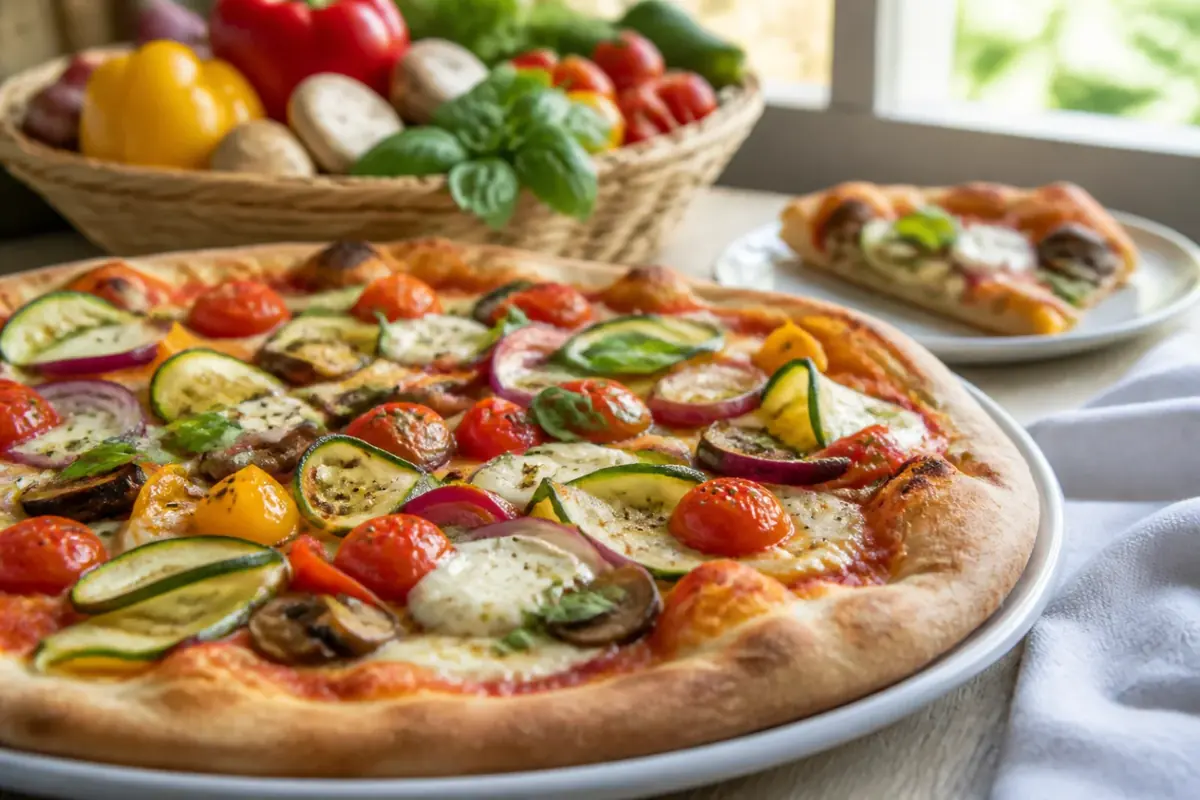
Vegetable pizza turns soggy when too many raw toppings release water faster than the crust can bake. This recipe avoids that problem by browning the mushrooms and briefly cooking the zucchini before either reaches the dough. The peppers and onion remain raw but are sliced thinly, so they soften and develop browned edges during the bake.
The topping quantities are deliberately restrained. One-third cup of sauce and 4 ounces of mozzarella provide coverage without burying the dough, while the vegetables are distributed with small gaps between them. Those open spaces allow steam to escape and expose some cheese to the oven’s heat.
A pizza steel or stone gives the crust the strongest bottom heat, but an inverted rimmed baking sheet also works. Because home ovens and baking surfaces differ, the instructions provide timing ranges as well as visible signs of doneness: a browned rim, bubbling cheese, lightly charred vegetable edges, and an underside that feels firm rather than soft.
The recipe
Vegetable Pizza with Mushrooms, Peppers and Zucchini
Pizza and cheese
- 1 portion pizza dough, 10 to 12 ounces (285 to 340 grams), at room temperature
- 1 to 2 teaspoons flour or fine semolina, for the peel or work surface
- 1/3 cup (about 80 grams) tomato pizza sauce
- 4 ounces (113 grams) low-moisture whole-milk or part-skim mozzarella, shredded
- 1 tablespoon finely grated Parmesan, optional
- 1/4 teaspoon dried oregano
- Fresh basil leaves or crushed red pepper, optional, for serving
Vegetable topping
- 4 ounces (113 grams) cremini or white button mushrooms, sliced about 1/4 inch thick
- 1/2 small zucchini, about 3 ounces (85 grams), cut into 1/8-inch half-moons
- 1/2 small bell pepper, about 2 1/2 ounces (70 grams), cut into thin strips
- 1/4 medium red onion, about 2 ounces (57 grams), thinly sliced
- 2 teaspoons olive oil, divided
- 1/4 teaspoon kosher salt, divided, plus more only if needed
Method
- Heat the oven and baking surface. Place a pizza steel or stone on a rack in the upper-middle or middle position. Heat the oven to 500°F, or to its highest setting if that is lower, for at least 45 minutes. For an inverted heavy rimmed baking sheet, preheat the oven to 475°F with the sheet inside for about 30 minutes. Check the manufacturer’s temperature limits before heating any stone, steel, pan, or parchment paper.
- Bring the dough to room temperature. Keep the covered dough at room temperature for 60 to 90 minutes, depending on its starting temperature and the room. It is ready to shape when it feels pliable and stretches without immediately snapping back. Keep it covered while it warms so the surface does not form a dry skin.
- Wash and dry the vegetables. Rinse the mushrooms, zucchini, pepper, and onion as appropriate under running water before cutting, then dry them well with a clean towel. Do not use soap or detergent on produce. Trim damaged areas and remove the pepper’s stem, seeds, and pale inner ribs. The FDA recommends washing produce under running water and drying it with a clean cloth or paper towel. (fda.gov)
- Brown the mushrooms. Heat a large skillet over medium-high heat. Add 1 teaspoon olive oil and the mushrooms, spreading them into one layer. Cook for 4 to 6 minutes, stirring only occasionally, until they have released their liquid and begun to brown. Season with about half of the kosher salt during the final minute.
- Cook the zucchini briefly. Add the remaining teaspoon of olive oil and the sliced zucchini to the skillet. Cook for 2 to 3 minutes, stirring once or twice, until the surfaces look slightly dry and a few pieces show golden spots. The zucchini should remain firm because it will continue cooking on the pizza. Transfer the mushrooms and zucchini to a plate and let them cool for at least 5 minutes. Blot away visible moisture or excess oil.
- Shape the dough. Dust a pizza peel or work surface lightly with flour or semolina. Press the dough from the center toward the edge, leaving a 1/2- to 3/4-inch rim. Lift and stretch it over the backs of your hands until it forms an approximately 12-inch round. If it repeatedly contracts, cover it and wait 10 minutes before continuing. Avoid using a rolling pin if you want a puffier rim.
- Add the toppings. Spread the sauce across the dough in a thin layer, stopping about 1/2 inch from the edge. Add the mozzarella evenly. Scatter the cooked mushrooms and zucchini over the cheese, followed by the raw pepper and red onion. Leave small gaps between the vegetables instead of piling them into clusters. Finish with Parmesan, if using, the remaining salt, and the dried oregano.
- Check that the pizza can slide. Shake the peel gently before approaching the oven. The assembled pizza should move as one piece. If an area sticks, lift that edge and add a small pinch of flour or semolina underneath. Work promptly after adding the sauce because moisture will make the dough increasingly difficult to launch.
- Bake until browned and firm. Slide the pizza onto the hot steel or stone and bake at 500°F for 7 to 11 minutes. On an inverted baking sheet at 475°F, bake for about 11 to 15 minutes. Rotate the pizza once if one side colors much faster. It is done when the rim is well browned, the cheese bubbles in several places, the pepper and onion have softened, and the underside is firm with brown spots. A pale, flexible center needs more time.
- Rest, finish, and slice. Transfer the pizza to a cutting board or wire rack and let it stand for 3 minutes. This short rest allows steam to escape and helps the cheese settle instead of sliding off with the first cut. Add basil or crushed red pepper, if desired, then cut into six slices and serve while the crust is still crisp.
Equipment and oven setup
Useful equipment includes a large skillet, chef’s knife, cutting board, towels, a pizza peel or rimless sheet pan, and a wheel cutter or sturdy knife. A pizza steel transfers heat quickly and generally produces more bottom browning than a stone. A stone remains a good option but should be heated and cooled according to its manufacturer’s directions to reduce the chance of thermal shock.
If you do not own a stone or steel, turn a heavy rimmed baking sheet upside down and preheat it. The flat underside makes it easier to slide the pizza into the oven. Another option is to shape the dough directly on a lightly oiled, room-temperature pizza pan; this is easier to handle, although the base may be softer because the pan does not begin fully heated.
Parchment can simplify the transfer, but many products have temperature limits below 500°F. Follow the package directions. If the permitted temperature is appropriate, you can launch the pizza on parchment and carefully remove the paper after the crust has set for 2 to 3 minutes.
Why cooking some vegetables first matters
Mushrooms contain enough water to flood a pizza when they are crowded onto the dough raw. Cooking them in a wide, hot skillet gives that liquid space to evaporate. Continue until the skillet no longer contains a visible puddle and the mushroom edges begin to brown. A small skillet encourages steaming, so cook in two batches if necessary.
Zucchini also releases water, but it does not need to become fully tender before baking. Thin pieces require only a brief trip through the skillet. Thick rounds are more likely to remain watery in the center, while paper-thin pieces can scorch before the crust finishes. Slices close to 1/8 inch offer a useful middle ground.
Bell pepper and red onion can go onto this pizza raw because they are used in modest amounts and cut thinly. If you prefer very soft vegetables, add them to the skillet after the zucchini and cook for 1 to 2 minutes. Cool every cooked topping before assembly; hot vegetables can soften the raw dough and warm the cheese prematurely.
Topping substitutions and variations
The recipe works as a framework for other vegetables, but preparation should match the ingredient. Drain jarred artichokes, roasted peppers, and olives, then blot them thoroughly. Cook eggplant, broccoli stems, winter squash, or thick asparagus before adding them. Tender spinach should be wilted and squeezed dry. Cherry tomatoes are best halved, lightly salted, and drained cut-side down before use.
Keep the total quantity close to the amount listed rather than adding every vegetable at once. Extra topping weight slows the bake, traps steam, and can leave the center limp. When using strongly flavored ingredients such as olives, pickled peppers, or sun-dried tomatoes, replace part of the vegetable mixture instead of treating them as an additional layer.
Provolone, fontina, or Monterey Jack can replace part of the mozzarella. Fresh mozzarella contains more water than low-moisture mozzarella, so tear it into small pieces and drain it well before use. Dairy-free shreds are another option, but browning and melting vary by formulation; use the package directions as a guide and avoid adding an extra-thick layer.
For a vegan pizza, omit the Parmesan and use a suitable plant-based cheese or leave the cheese off entirely. A cheeseless version benefits from a light brush of olive oil and a finishing ingredient with concentrated flavor, such as chopped olives, toasted walnuts, or a spoonful of dairy-free pesto. Verify every packaged ingredient if allergies or dietary restrictions are involved.
- Replace the zucchini with thin asparagus pieces that have been sautéed for 2 to 3 minutes.
- Replace half the mushrooms with well-drained artichoke hearts.
- Add 1 small minced garlic clove to the mushrooms during their final 30 seconds in the skillet.
- Use yellow, orange, or green bell pepper according to the flavor and color you prefer.
- Finish the baked pizza with arugula dressed lightly with olive oil and lemon rather than baking the greens.
Dough, sauce, and allergen options
A refrigerated store-bought dough is suitable if one portion weighs roughly 10 to 12 ounces. Larger dough balls can make a thicker 12-inch pizza and may need several additional minutes in the oven. Follow any preparation and maximum-temperature instructions supplied with the dough.
Use a relatively thick pizza sauce rather than a watery pasta sauce. If your sauce looks loose, simmer it briefly and cool it before assembly, or drain off some excess liquid. One-third cup is enough for a 12-inch pizza; adding more can prevent the center from becoming crisp.
The standard recipe contains wheat and dairy. A gluten-free pizza requires dough and all other ingredients verified for the diner’s needs. Some gluten-free doughs are spread rather than stretched and may require a partial bake before topping, so follow the dough manufacturer’s method. Shared utensils, flour dust, cutting boards, ovens, and baking surfaces can create cross-contact even when the individual ingredients do not contain the allergen.
Make-ahead preparation
The vegetables can be cut and cooked up to one day ahead. Cool them promptly, store them in a covered container in the refrigerator, and blot them again before topping the pizza. Keep the sauce, cheese, and vegetables in separate containers so moisture does not migrate between them.
Do not assemble the pizza hours in advance. Sauce begins soaking into raw dough as soon as it is spread, and salted vegetables continue releasing moisture while they sit. Shape and top the pizza only after the oven and baking surface are fully heated.
Storage and reheating
Refrigerate leftover pizza within 2 hours of baking, or within 1 hour if the surrounding temperature is above 90°F. Store slices in a shallow, covered container or wrap them tightly. USDA guidance recommends using refrigerated leftovers within 3 to 4 days and reheating leftovers to 165°F. (fsis.usda.gov)
For a crisp base, place refrigerated slices in a covered skillet over medium-low heat for 4 to 7 minutes. Once the underside is crisp, add a few drops of water beside—not on—the pizza and cover for about 30 seconds to help warm the top. An oven or toaster oven also works: heat the slices at 375°F for approximately 6 to 10 minutes, until the cheese is hot and the center reaches 165°F.
Microwaving is quick but softens the crust. Place a slice on a microwave-safe plate and heat in short intervals until it reaches 165°F throughout. Do not rely only on melted cheese as a safety or doneness indicator because the crust and toppings may heat unevenly.
Pizza can be frozen for longer storage. Cool it, freeze individual slices on a tray until firm, and transfer them to freezer-safe packaging. Reheat frozen slices in a 375°F oven for roughly 12 to 18 minutes, checking that the center reaches 165°F. Freezing may soften the vegetables, so the texture will not be identical to a freshly baked pizza.
Troubleshooting vegetable pizza
A wet center usually comes from excess sauce, crowded toppings, vegetables that were not dried, or insufficient bottom heat. Measure the sauce, cook watery vegetables until their released liquid evaporates, and leave open spaces across the cheese. Give a stone or steel its full preheating time rather than judging only by the oven’s air-temperature signal.
If the crust browns underneath before the top is ready, move the rack one level higher for the next pizza or lower the oven temperature by 15°F to 25°F. If the cheese and vegetables brown while the underside remains pale, move the rack lower, preheat the baking surface longer, or reduce the topping load.
A dough that snaps back is usually too cold or has not rested long enough after handling. Cover it and wait 10 to 15 minutes; resting allows the gluten network to relax. If the dough tears, pinch the hole closed before adding sauce. Avoid stretching the repaired area aggressively.
Toppings that slide off may indicate too much sauce, too much cheese, or slicing immediately after baking. Use thin, even layers and let the finished pizza rest for about 3 minutes. A sharp cutter also helps: repeated pressure with a dull wheel drags cheese and vegetables across the crust.
Recipe questions
Questions about this recipe
Can I put all the vegetables on the pizza raw?
Thin pepper and onion slices can bake from raw, but mushrooms and zucchini are more reliable when partially cooked. Browning the mushrooms evaporates their released liquid, while briefly sautéing zucchini dries its surface. If you use every vegetable raw, reduce the total amount and expect a softer center.
Can I use frozen vegetables?
Yes, but thaw them completely and press out as much water as possible. Frozen vegetables often soften after thawing, so they are better for flavor than for crisp texture. Broccoli, spinach, and pepper strips are practical choices after draining; frozen zucchini tends to become particularly soft.
Why is low-moisture mozzarella recommended?
Low-moisture mozzarella melts evenly without releasing as much liquid as fresh mozzarella. That makes it easier to keep a vegetable-heavy pizza crisp. Fresh mozzarella can still work if it is drained, torn into small pieces, and used sparingly.
How much vegetable topping should go on a 12-inch pizza?
Use roughly 1 1/2 cups of prepared vegetables after cooking and draining. The pieces should cover the pizza without forming a solid blanket. If you want more vegetables, serve a salad alongside the pizza rather than overloading the dough.
Can this pizza be made without a pizza stone or steel?
Yes. Preheat an inverted heavy baking sheet at 475°F and launch the pizza onto its flat underside, or bake the pizza on a lightly oiled pizza pan. Expect approximately 11 to 15 minutes of baking time, and judge doneness by the browned rim and firm underside.
Should vegetable pizza dough be partially baked first?
A conventional wheat dough does not usually require a partial bake when the toppings are controlled and the baking surface is thoroughly heated. A partial bake may help with certain gluten-free doughs, very thick crusts, or pans that deliver weak bottom heat. Follow the dough’s instructions when they specify this step.
Sources and further reading