
Pizza Informer recipe
Roasted Red Pepper and Feta Pizza
Published December 17, 2022Last updated August 7, 2026
A 12-inch roasted red pepper and feta pizza built for a crisp, sturdy crust, with well-drained peppers, restrained sauce, mellow mozzarella, briny feta, oregano, and a measured squeeze of lemon.
Jump to recipe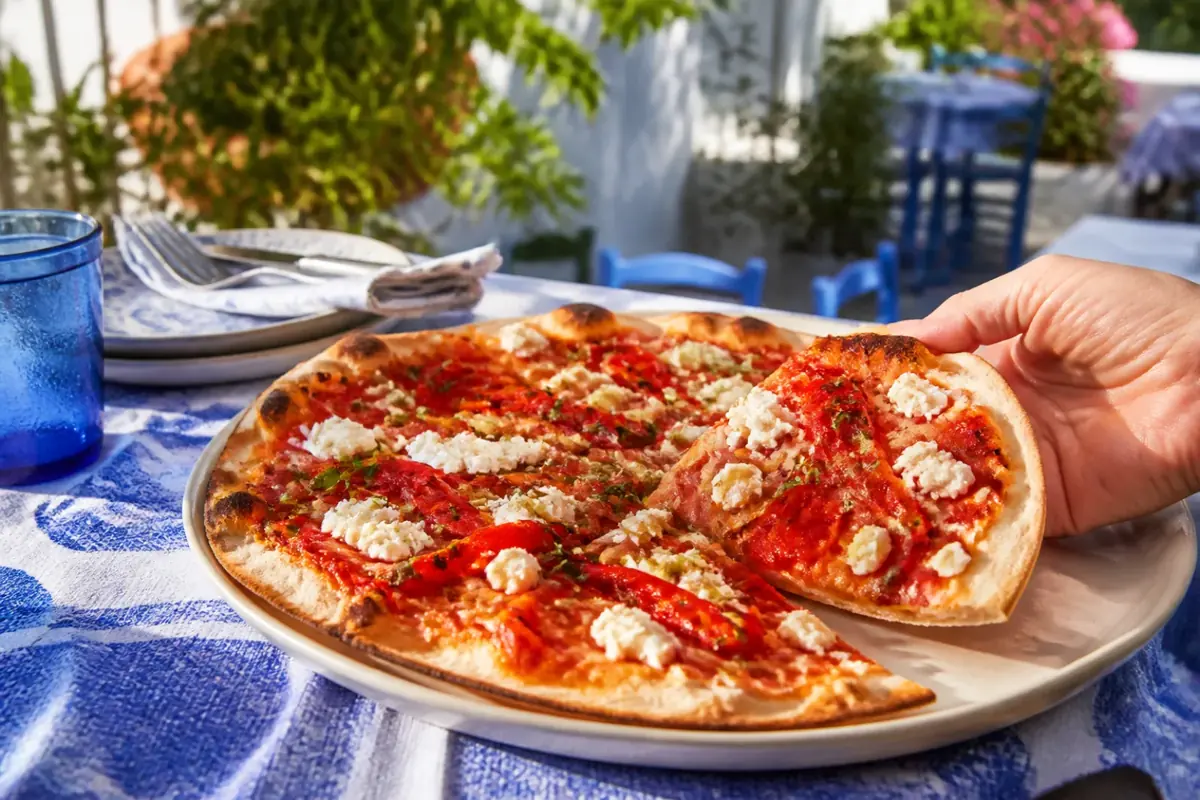
Roasted red peppers and feta make a lively pizza, but both ingredients need a little management. Peppers packed in water or brine can soak the center of the crust, while feta can supply enough salt to overwhelm the sauce and mozzarella. Draining the peppers thoroughly, limiting the sauce, and distributing the feta in small crumbles correct those problems without muting the toppings.
This recipe uses low-moisture mozzarella as the melting cheese and feta as a seasoning cheese. The mozzarella forms a protective layer over the sauce and holds the toppings in place; the feta keeps its crumbly character and develops browned edges. Dried oregano goes on after baking so it remains fragrant, and a small amount of lemon juice sharpens the roasted pepper without making the finished pizza wet.
The baking method is written for a conventional home oven with a pizza steel or stone, followed by directions for a sheet pan. Oven performance varies, so treat the stated time as a range. The pizza is ready when the rim is deeply browned in spots, the cheese bubbles, and the underside is firm enough to support a lifted slice.
The recipe
Roasted Red Pepper and Feta Pizza
Pizza
- 1 portion prepared pizza dough, about 10 ounces or 280 grams, at room temperature
- 1/3 cup or 80 grams thick pizza sauce
- 3 ounces or 85 grams low-moisture whole-milk mozzarella, coarsely shredded
- 1/2 cup or 90 grams roasted red pepper strips, measured after draining
- 2 ounces or 56 grams feta, drained if necessary and crumbled into small pieces
- 1/2 teaspoon dried oregano
- 1/2 teaspoon fresh lemon juice, plus more only after tasting
- 1 teaspoon extra-virgin olive oil, optional, for finishing
- Semolina flour or regular flour, for the peel or work surface
Optional additions
- 1/8 teaspoon red pepper flakes
- 1 tablespoon thinly sliced fresh basil, added after baking
- 1 tablespoon very thinly sliced red onion, kept separate rather than piled into clumps
- Freshly ground black pepper, to taste
Method
- Bring the dough to room temperature. If the dough has been refrigerated, keep it covered at room temperature for 60 to 90 minutes before shaping. It should feel cool but flexible. Dough that snaps back immediately is still too cold or tense; give it another 10 to 15 minutes of covered rest rather than forcing it wider.
- Preheat the oven and baking surface. Place a pizza steel or stone on a rack in the upper-middle or middle position, leaving enough clearance that the rising rim cannot approach the broiler element. Heat the oven to its highest normal baking setting, ideally 500°F to 550°F, for 45 to 60 minutes. Follow the temperature and preheating limits supplied with your baking surface. A thoroughly heated surface transfers energy quickly to the dough, helping the underside set before topping moisture can soften it.
- Drain the roasted peppers. Spread the roasted pepper strips on a clean kitchen towel or several layers of paper towel. Blot firmly, turn them over, and blot again. If the strips are wider than about 1/2 inch, cut them narrower so they can be distributed without forming wet piles. Taste one strip: peppers packed in brine may already contribute noticeable salt or acidity.
- Prepare the remaining toppings. Shred the mozzarella and crumble the feta into pieces no larger than a chickpea. Taste a small piece of feta before seasoning anything else. Most versions provide enough salt for the entire pizza, so the recipe does not call for additional salt. Keep the measured lemon juice, oregano, and any optional fresh herbs aside for the finish.
- Stretch the dough. Lightly dust a pizza peel with semolina or flour. Flatten the dough on a separate lightly floured surface, leaving a 1/2-inch rim thicker than the center. Stretch it into an 11- to 12-inch round by lifting and rotating it over the backs of your hands. Do not use a rolling pin unless you specifically want a flatter, less airy rim. Transfer the round to the prepared peel and shake it gently to confirm that it slides.
- Top lightly and evenly. Spread the sauce over the dough, stopping about 1/2 inch from the edge. Use the back of a spoon to make a thin, even layer with no deep pools. Scatter on the mozzarella, followed by the dried pepper strips and feta. Leave small gaps between the toppings so heat can reach the sauce and dough. Add red pepper flakes, black pepper, or the optional sliver of red onion now. Do not add the lemon, basil, or finishing oil before baking.
- Check the release. Shake the peel again before approaching the oven. The assembled pizza should move as one piece. If one section sticks, lift that edge with a dough scraper and toss a pinch of semolina or flour underneath. Work promptly after adding sauce because raw dough becomes harder to release as it absorbs moisture.
- Bake the pizza. Slide the pizza onto the hot steel or stone. Bake for 6 to 10 minutes at 500°F to 550°F, turning it once after the rim has set if your oven browns unevenly. Look for a puffed rim with dark golden patches, bubbling mozzarella, lightly browned feta, and an underside that is browned rather than pale or soft. If the bottom finishes before the top, move the pizza to a higher rack for the final minute. If the top browns first, lower the rack or reduce the oven setting slightly for the next pizza.
- Finish and rest. Transfer the pizza to a wire rack for 2 minutes so steam can escape from the underside. Sprinkle with oregano, then distribute 1/2 teaspoon lemon juice across the pizza rather than pouring it in one place. Add basil or a thin drizzle of olive oil if using. Taste before adding more lemon, salt, or feta. Move the pizza to a board, cut it into six slices, and serve while the crust remains crisp.
Equipment and sheet-pan method
For the main method, you need a conventional oven, pizza steel or stone, peel, cutting board, pizza wheel or chef’s knife, and a clean towel or paper towels for the peppers. A kitchen scale is useful because a small difference in cheese or sauce can noticeably change the moisture load on a 12-inch pizza.
Without a stone or steel, shape the dough on a lightly oiled dark metal sheet pan. Add the toppings as directed and bake at 500°F, or at the highest temperature allowed by the pan’s manufacturer, for approximately 11 to 16 minutes. Set the pan on a lower-middle rack to encourage bottom browning. The pizza is done when the crust releases cleanly from the pan, the base is browned, and the center does not sag when lifted with a spatula.
A room-temperature sheet pan will not deliver the same rapid bottom heat as a fully preheated steel, so avoid compensating with extra sauce or cheese. For a crisper base, place the pan directly on a preheated stone or steel if both pieces of equipment are approved for that use.
- Use a metal peel or a thin wooden peel large enough for a 12-inch pizza.
- Check the temperature rating for every stone, steel, pan, and other accessory.
- Avoid glass bakeware at these temperatures unless its manufacturer explicitly approves the intended use.
- Keep oven gloves nearby and clear the area around the open oven before loading the pizza.
Why the topping order matters
Sauce goes directly on the dough, but only in a thin layer. Low-moisture mozzarella follows, creating broad coverage without releasing as much water as fresh mozzarella. The peppers and feta sit on top, where oven heat can evaporate surface moisture and brown their exposed edges.
Feta behaves differently from a high-moisture melting cheese. It softens and browns but usually retains distinct crumbles. Using it as the only cheese can leave the toppings loosely attached and make every bite sharply salty. Pairing 2 ounces of feta with 3 ounces of mozzarella produces a more cohesive pizza while keeping the feta recognizable.
The final lemon juice is intentionally limited to 1/2 teaspoon. It supplies acidity without soaking the surface. If your peppers were packed in vinegar or the feta tastes particularly tangy, omit the lemon at first and offer wedges at the table.
Ingredient choices and substitutions
Jarred roasted peppers are convenient, provided they are drained and blotted. Home-roasted peppers also work: char a red bell pepper, cover it briefly to loosen the skin, peel it, remove the stem and seeds, and let the flesh drain before slicing. One medium-to-large bell pepper should provide roughly the required amount, although pepper sizes and water content vary.
Block low-moisture whole-milk mozzarella generally melts more evenly than pre-shredded cheese, which may contain starches or other anti-caking ingredients. Part-skim low-moisture mozzarella is a workable substitute and may brown a little faster. Fresh mozzarella is not a direct substitution unless it is drained thoroughly and used sparingly; otherwise, it can add enough water to soften the center.
For a milder pizza, replace half of the feta with additional mozzarella. Goat cheese can replace the feta, but it will taste creamier and less briny. Crumble it into small pieces and use the same weight. Ricotta is wetter and should be drained, applied in small spoonfuls, and limited to about 1/3 cup.
A wheat-free pizza requires dough specifically formulated and verified for that need; shaping and baking instructions may differ from this recipe. For a dairy-free version, use suitable melting and feta-style alternatives, recognizing that their salt level, oil release, and browning behavior vary. Check every packaged ingredient when avoiding an allergen.
- Yellow or orange roasted peppers can replace the red peppers without changing the method.
- Fresh oregano may be used after baking; start with 1 teaspoon of chopped leaves.
- For more savoriness without extra moisture, add a light dusting of finely grated Parmesan, but taste the feta first because both cheeses are salty.
- Do not substitute undrained marinated vegetables cup for cup; artichokes, olives, and sun-dried tomatoes may add oil, salt, or water and require separate draining.
Moisture, salt, and topping balance
A wet center usually begins before the pizza enters the oven. Sauce applied too heavily, pepper strips carried straight from the jar, and a thick blanket of cheese can insulate the dough from heat. Measure the toppings for the first bake, then adjust one variable at a time if your oven and dough can handle more.
After blotting, the pepper strips should feel supple but should not leave beads of liquid on the towel. If they remain very wet, chop them and briefly warm them in a dry skillet over medium heat until surface moisture evaporates. Cool them before topping so they do not soften the raw dough.
Salt is harder to remove than to add. Feta, jarred peppers, prepared sauce, and mozzarella may all contain salt, so tasting the components is more useful than automatically seasoning the assembled pizza. Lemon, oregano, and black pepper can strengthen the flavor without adding sodium.
Storage and reheating
Refrigerate leftover pizza within 2 hours of baking, or within 1 hour when the surrounding temperature is above 90°F. Store slices in a shallow airtight container or wrap them once cool enough to handle. Keep the refrigerator at 40°F or below and use refrigerated pizza within 3 to 4 days. These limits follow current USDA and FDA guidance for leftovers.
For a crisp reheated base, place slices in a covered skillet over medium-low heat for 3 to 6 minutes. Once the bottom is crisp, add a few drops of water to an empty area of the skillet, cover briefly, and let the steam warm the cheese. Do not pour water onto the pizza.
An oven or toaster oven also works: heat slices at 375°F to 400°F for about 6 to 10 minutes, until the base is crisp and the toppings are hot. USDA guidance advises reheating leftovers to 165°F. A microwave heats quickly but tends to soften the crust; use short intervals and check more than one part of the slice for even heating.
For longer storage, wrap individual slices securely and freeze them for 1 to 2 months for best quality. Reheat from frozen in a 375°F oven for approximately 12 to 18 minutes, adjusting for slice thickness and appliance performance.
Troubleshooting the bake
If the center is pale and limp while the rim looks finished, the baking surface may not have been fully heated, the pizza may be overloaded, or the peppers may have retained too much liquid. Extend the preheat, blot the peppers more firmly, and keep the sauce at or below 1/3 cup.
If the bottom burns before the cheese bubbles, the steel may be too close to the lower heating element or the oven may transfer heat more aggressively than expected. Raise the rack one position, lower the temperature by 25°F, or move the pizza to a cooler rack after the underside sets.
If the rim stays dense, avoid pressing all the gas from the edge while shaping. Cold dough and heavy toppings can also limit expansion. Let refrigerated dough warm until flexible and keep the outer 1/2 inch free of sauce and cheese.
If the pizza sticks to the peel, it probably sat too long after topping or did not have enough dry flour beneath it. Check for movement before adding toppings and again before loading. A small dough scraper can release an isolated sticky area without distorting the entire round.
- Cheese releases pools of oil: use less cheese, choose a different mozzarella, or blot the surface lightly after baking.
- Feta tastes harshly salty: reduce it to 1 1/2 ounces and increase the mozzarella by the same weight.
- The pizza tastes flat: add oregano, black pepper, or a few extra drops of lemon before reaching for salt.
- The crust is cooked but soft after cutting: rest it on a wire rack before moving it to a solid board.
Recipe questions
Questions about this recipe
Can I use peppers straight from the jar?
Yes, but drain and blot them first. Liquid clinging to the peppers is one of the main causes of a damp center. Cut broad pieces into narrow strips so they spread evenly and dry more readily in the oven.
Does feta melt on pizza?
Feta softens and may brown around the edges, but it does not form the stretchy, continuous layer produced by mozzarella. Small crumbles provide more even coverage and are easier to balance with the other toppings.
Should feta go on before or after baking?
Add most or all of it before baking so the crumbles warm and develop lightly browned edges. If you want a sharper fresh-feta flavor, reserve a tablespoon and scatter it over the finished pizza.
Can I make this pizza without tomato sauce?
Yes. Brush the stretched dough with 1 tablespoon of olive oil, add the mozzarella, peppers, and feta, and bake as directed. Finish with lemon and oregano. Watch the underside closely because an oil-based pizza may brown differently from one protected by tomato sauce.
What other toppings work with roasted pepper and feta?
Thin red onion, Kalamata olives, spinach, basil, and red pepper flakes all fit the flavor profile. Add only one or two at a time and keep the total topping load modest. Drain olives, wilt and squeeze spinach dry, and use cured meats only according to their package cooking directions.
Why is there no added salt in the recipe?
Feta, mozzarella, prepared sauce, and jarred peppers can all contain salt. Their levels vary by product, so tasting the feta and peppers before assembly gives you better control than adding a fixed quantity of salt.
Sources and further reading