Pizza Informer recipe
Four-Cheese Pizza Recipe
Published December 16, 2022Last updated August 7, 2026
A 12-inch four-cheese pizza with mozzarella for stretch, fontina for smooth melting, ricotta for creamy pockets, and Parmesan for a savory finish.
Jump to recipe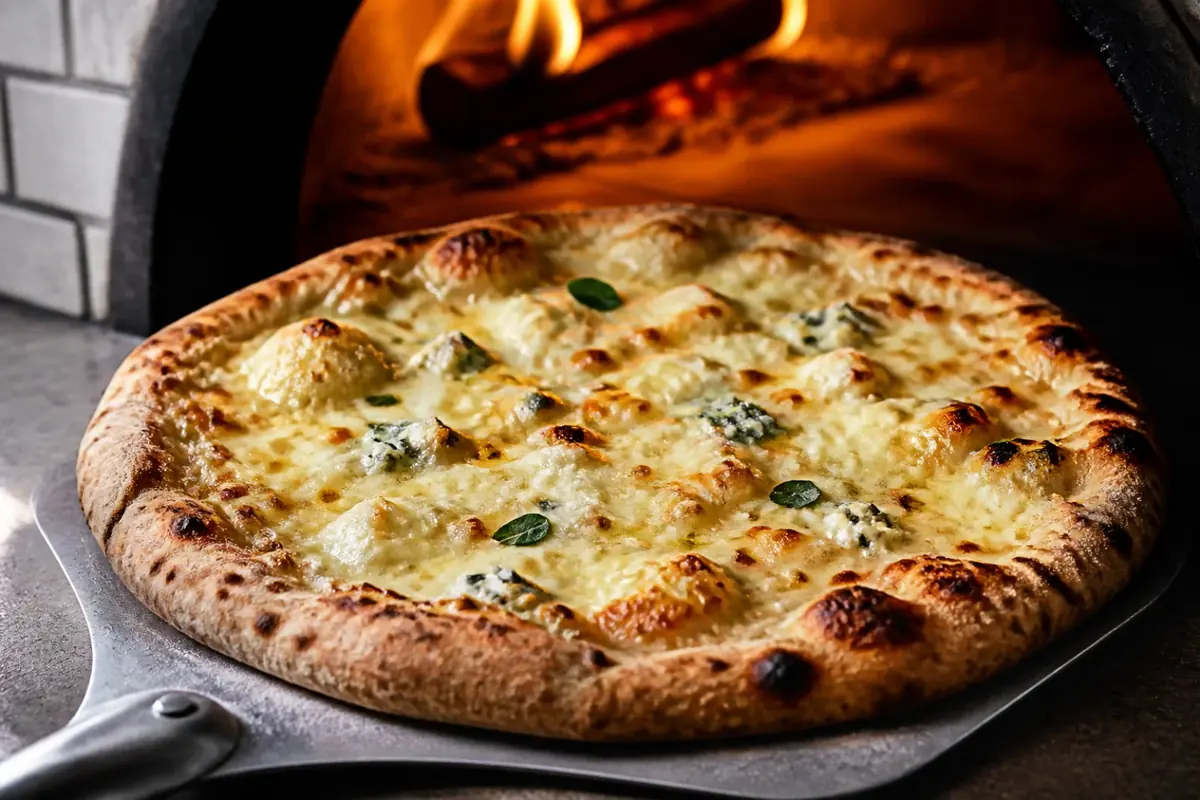
Four-cheese pizza works best when each cheese has a specific job. Low-moisture mozzarella supplies the familiar melt and stretch, fontina adds richness without releasing much water, ricotta forms soft pockets, and Parmesan brings concentrated flavor and browning. The measured quantities keep the pizza cheesy without burying the dough under a greasy, salty blanket.
This recipe makes one 12-inch pizza with a thin layer of tomato sauce. It includes directions for a preheated pizza stone or steel as well as an ordinary sheet pan. Leave a few visible gaps between the cheeses: the sauce can then reduce in the oven, steam can escape, and the finished slice will hold its shape more readily.
No extra salt is added because Parmesan, mozzarella, sauce, and prepared dough may already contain plenty. Taste the individual components before deciding whether the baked pizza needs anything more than black pepper, herbs, or a small drizzle of olive oil.
The recipe
Four-Cheese Pizza Recipe
Pizza
- 1 pizza dough ball, about 8 1/2 to 9 ounces (240 to 255 grams), enough for one 12-inch thin-crust pizza
- 1 to 2 teaspoons all-purpose flour or fine semolina, for dusting
- 1/4 cup thick tomato pizza sauce
- 3 ounces low-moisture whole-milk mozzarella, shredded
- 1 ounce fontina, shredded
- 1 ounce whole-milk ricotta, well drained if watery
- 1/2 ounce Parmesan, finely grated, about 1/4 cup loosely packed
- 1 teaspoon extra-virgin olive oil, optional, for finishing
- 1/8 teaspoon freshly ground black pepper, optional
- 1 tablespoon torn fresh basil or 1/4 teaspoon dried oregano, optional
Equipment
- Pizza stone or steel and a pizza peel, or a sturdy rimmed sheet pan
- Oven capable of reaching at least 475°F
- Box grater or coarse grating surface
- Small spoon for distributing sauce and ricotta
- Cooling rack, cutting board, and pizza wheel or chef’s knife
Method
- Bring the dough toward room temperature. Remove refrigerated dough from its container 60 to 90 minutes before baking. Keep it covered so the surface does not dry out. The dough is ready to shape when it feels pliable and slowly springs back after a gentle press. If it snaps back immediately, cover it and wait another 10 to 15 minutes. A cold, tight dough is difficult to stretch and is more likely to tear or shrink.
- Preheat the baking surface. For a pizza stone or steel, place the surface on a rack in the upper-middle or middle of the oven. Heat the oven to its highest conventional setting, ideally 500°F to 550°F, for at least 45 minutes. A thick stone may benefit from a full hour. For a sheet pan, place a rack in the lower-middle position and heat the oven to 475°F for at least 20 minutes. Do not exceed the temperature rating for your pan, stone, steel, parchment, or other equipment.
- Prepare the cheeses. Shred the mozzarella and fontina while they are cold, then combine them loosely in a bowl. Keep the ricotta separate. Finely grate the Parmesan into another small bowl. If the ricotta has visible liquid, let it drain in a fine-mesh strainer for 10 to 20 minutes or blot it gently with a clean paper towel. Removing excess surface moisture helps prevent pale, wet patches around the dollops.
- Shape the dough. Lightly dust the work surface and the top of the dough with flour. Press from the center outward, leaving a 1/2-inch border thicker than the middle. Lift the dough and stretch it over the backs of your hands, rotating as you work, until it forms a roughly 12-inch round. Avoid pressing down the rim after it begins to form. If a thin spot appears, lay the dough down and pinch it closed before adding any toppings.
- Move the crust to the peel or pan. For a stone or steel, dust a pizza peel lightly with flour or fine semolina and place the stretched dough on it. Give the peel a short shake to confirm that the dough slides. For a sheet-pan pizza, lightly oil the pan or line it with oven-safe parchment rated for the baking temperature, then stretch the dough to about 12 inches directly on the pan. A pan-baked crust may be slightly less round, which does not affect the result.
- Add the sauce and four cheeses. Spread the 1/4 cup sauce in a thin layer, stopping about 1/2 inch from the edge. Scatter the mozzarella-fontina mixture evenly over the sauce without covering every red patch. Drop the ricotta in 8 to 10 small portions, each about 1/2 teaspoon. Finish with the Parmesan. Small, evenly spaced ricotta dollops warm more reliably and are less likely to flood the center than a few large spoonfuls. Add black pepper or dried oregano now, if using.
- Check that the pizza can move. If using a peel, shake it gently again before approaching the oven. If one area sticks, lift that edge with a dough scraper and toss a small pinch of flour or semolina underneath. Work promptly once the sauce is on the dough because moisture gradually makes the base harder to launch. Do not jerk the peel forcefully; short forward-and-back movements give better control.
- Bake until browned and firm. Slide the pizza onto the fully heated stone or steel and bake for 6 to 10 minutes, rotating once if the back browns faster than the front. On a sheet pan at 475°F, bake for 10 to 14 minutes. The pizza is done when the rim is expanded and browned, the underside is firm with golden or dark toasted areas, the mozzarella and fontina are fully melted, and the Parmesan shows light spotting. If the top is ready but the bottom remains pale, move the pizza to a lower rack for another 1 to 2 minutes.
- Rest, finish, and cut. Transfer the pizza to a cooling rack for 2 minutes so steam does not soften the bottom. Move it to a cutting board and add fresh basil or a light drizzle of olive oil, if desired. Wait another minute before slicing. This brief rest lets the cheese settle, reducing the chance that the toppings will slide away with the first cut.
Why these four cheeses work together
Low-moisture whole-milk mozzarella is the structural cheese in this recipe. It melts into a cohesive layer, browns more predictably than very wet fresh mozzarella, and helps hold the smaller ricotta portions in place. Shredding it yourself generally produces distinct strands that are easy to distribute, although packaged shredded mozzarella remains a practical option.
Fontina melts smoothly and contributes a buttery, rounded flavor. It is used in a smaller amount because too much can make the surface oily and mute the tomato sauce. If the fontina has a tough outer rind, remove it before grating. The cheese should be scattered with the mozzarella rather than arranged in a separate layer.
Ricotta behaves differently from the two melting cheeses. It stays creamy and creates pockets rather than forming a continuous blanket. Parmesan supplies sharpness and encourages small browned areas across the surface. Because Parmesan is concentrated and often salty, one-half ounce is enough for a 12-inch pizza.
Control moisture and topping weight
A cheese pizza can become soggy even without vegetables or meat. Watery sauce, wet ricotta, excessive cheese, and an underheated baking surface all contribute moisture. Use a thick pizza sauce that sits on a spoon rather than running like tomato juice. Drain visibly wet ricotta, and do not increase every cheese simply because the uncooked pizza looks sparse.
The prescribed cheese adds up to 5 1/2 ounces. That is a generous layer for a 12-inch thin-crust pizza, especially once the cheese melts and spreads. Visible sauce between the shreds is intentional. Crowding the surface slows evaporation and can leave the center soft after the rim has browned.
- Keep the sauce to 1/4 cup unless the dough is thicker than specified.
- Use small ricotta dollops instead of broad smears.
- Avoid adding oil beneath the cheese; finish with a small amount after baking if wanted.
- Top the dough immediately before baking rather than letting the assembled pizza wait on the counter.
Substitutions that preserve the balance
Part-skim low-moisture mozzarella may replace whole-milk mozzarella. It usually brings less richness and may brown differently, but the same weight can be used. Fresh mozzarella is possible, though it should be drained thoroughly, torn into small pieces, and limited to about 3 ounces. Even after draining, it can produce a wetter surface than low-moisture cheese.
Provolone is the closest convenient substitute for fontina in this recipe. Choose a mild variety unless you want a sharper pizza. Monterey Jack melts well but has a milder flavor. Asiago or Pecorino Romano can replace Parmesan, but both may taste saltier; start with about 1/3 ounce and add more only if appropriate.
For a white four-cheese pizza, omit the tomato sauce and brush the stretched dough with no more than 2 teaspoons of olive oil. Add one small grated garlic clove if desired. Keep the cheese quantities unchanged so the base still has a chance to crisp.
- Gluten-free option: use one dough portion formulated for a 12-inch gluten-free pizza and follow its package or recipe instructions for shaping and any required par-bake.
- Herb option: add dried oregano before baking or fresh basil afterward. Fresh basil can darken or dry out during a hot bake.
- Heat option: add a small pinch of crushed red pepper over the sauce rather than stirring it into the cheese.
- Salt adjustment: choose unsalted sauce or lower-sodium cheese where practical, and taste the baked pizza before adding salt.
Stone, steel, and sheet-pan differences
A steel transfers heat quickly and can produce a dark, crisp underside before the cheese overcooks. At 550°F, begin checking the pizza at about 5 minutes. A stone heats the dough more gently and may need a longer preheat or another minute of baking. The exact result depends on the surface thickness, rack position, oven cycling, and how long the oven door stays open.
A sheet pan is slower because the pan begins cooler and shields the dough from direct contact with a masonry or metal baking deck. It still makes a sound pizza when fully preheated oven air surrounds it. For more bottom color, use a dark, heavy pan and place it on a lower rack. If the crust remains pale, slide the finished pizza off the pan and place it directly on the oven rack for 1 to 2 minutes, watching closely.
Troubleshooting four-cheese pizza
If the middle is wet, first check the ricotta and sauce rather than extending the bake until the rim burns. Drain the ricotta, use thicker sauce, and make smaller dollops next time. A thoroughly preheated surface also helps the dough set before topping moisture can soak through.
If a pool of oil forms on top, the cheese load may be too heavy, the fontina may be particularly rich, or the pizza may have baked slowly at a low temperature. Keep the listed weights, use high heat within the limits of your equipment, and blot a finished oily patch lightly with a paper towel if necessary.
If the crust stays dense, the dough may have been too cold, aggressively flattened, or overloaded. Give refrigerated dough enough time to relax, preserve the thicker rim during shaping, and use a light hand with sauce and cheese. If the rim browns before the base, lower the oven rack or reduce intense top heat.
If the dough sticks to the peel, use less time between topping and launching. Check that the plain dough slides before adding sauce, then check it again afterward. A wooden peel with a restrained dusting of flour or semolina is often easier for launching, while a thin metal peel is useful for turning and retrieving the baked pizza.
Serving ideas
Four-cheese pizza is rich, so crisp or acidic accompaniments provide useful contrast. Serve it with a salad of bitter greens and lemon vinaigrette, sliced tomatoes dressed with vinegar, or roasted broccoli. For the pizza itself, a few basil leaves, black pepper, crushed red pepper, or a modest drizzle of olive oil adds definition without introducing another heavy topping.
Cut the pizza into six slices for a main course or eight smaller slices for an appetizer. Letting it rest for about 3 minutes before cutting keeps the cheese from pulling away from the crust, but leaving it uncut for much longer can trap steam underneath if it sits on a solid board.
Storage and reheating
Refrigerate leftover pizza within 2 hours of baking, or within 1 hour if the surrounding temperature is above 90°F. Store slices in a shallow airtight container or wrap them closely once they have stopped steaming heavily. USDA guidance says refrigerated leftovers can generally be kept for 3 to 4 days; discard pizza that has remained at room temperature beyond the stated limit. (fsis.usda.gov)
For a crisp base, reheat one or two refrigerated slices in a covered skillet over medium-low heat for 3 to 5 minutes. Once the bottom is crisp, add a few drops of water to the empty side of the pan, cover for 30 to 60 seconds, and let the steam warm the cheese. Keep the water away from the crust.
An oven or toaster oven is better for several slices. Heat them at 375°F for about 6 to 10 minutes, until the base is crisp and the cheese is hot. USDA guidance recommends reheating leftovers to 165°F. A microwave works when speed matters, but it softens the crust; use short intervals and check several areas because microwave heating can be uneven. (foodsafety.gov)
To freeze, cool the slices promptly, wrap them individually, and place them in a freezer container. For better texture, reheat frozen slices in a 375°F oven rather than thawing them on the counter. Baking time will be longer than for refrigerated pizza, so begin checking after about 12 minutes.
Recipe questions
Questions about this recipe
Can I make this four-cheese pizza without tomato sauce?
Yes. For a white pizza, replace the sauce with up to 2 teaspoons of olive oil spread thinly over the dough. You may add one small grated garlic clove. Do not use a heavy oil layer, which can prevent the cheese from gripping the crust and make the center greasy.
Should I use fresh or low-moisture mozzarella?
Low-moisture whole-milk mozzarella is the more predictable choice for this recipe because it melts evenly and releases less water. Fresh mozzarella can be used if it is drained thoroughly, blotted, and torn into small pieces. Expect a softer, wetter surface.
Can I add blue cheese or goat cheese?
Yes, but replace another cheese rather than adding a fifth full portion. Substitute 1/2 to 1 ounce of the fontina or ricotta with crumbled blue cheese or goat cheese. Both have assertive flavors, and blue cheese can add considerable salt.
Why did my ricotta release water?
The ricotta may have contained excess whey, the dollops may have been too large, or the oven may not have been fully heated. Drain wet ricotta, use small portions, and preheat the baking surface for the full recommended time.
Can I prepare the pizza in advance?
Prepare the cheeses and sauce up to a day ahead and refrigerate them separately. Bring the dough toward room temperature before shaping, but do not assemble the pizza until the oven and baking surface are ready. Sauce left on raw dough can make it sticky and soft.
Does four-cheese pizza need extra salt?
Usually not. Prepared dough, sauce, mozzarella, fontina, and Parmesan can all contribute salt. Bake and taste the pizza first. If it seems flat, black pepper, herbs, or a small amount of Parmesan may improve the flavor without adding loose salt.
Sources and further reading