
Pizza Informer recipe
Supreme Pizza Recipe
Published December 2, 2022Last updated August 7, 2026
A balanced 12-inch supreme pizza with pepperoni, cooked sausage, mushrooms, peppers, onions, olives, and enough open space for the crust to bake properly.
Jump to recipe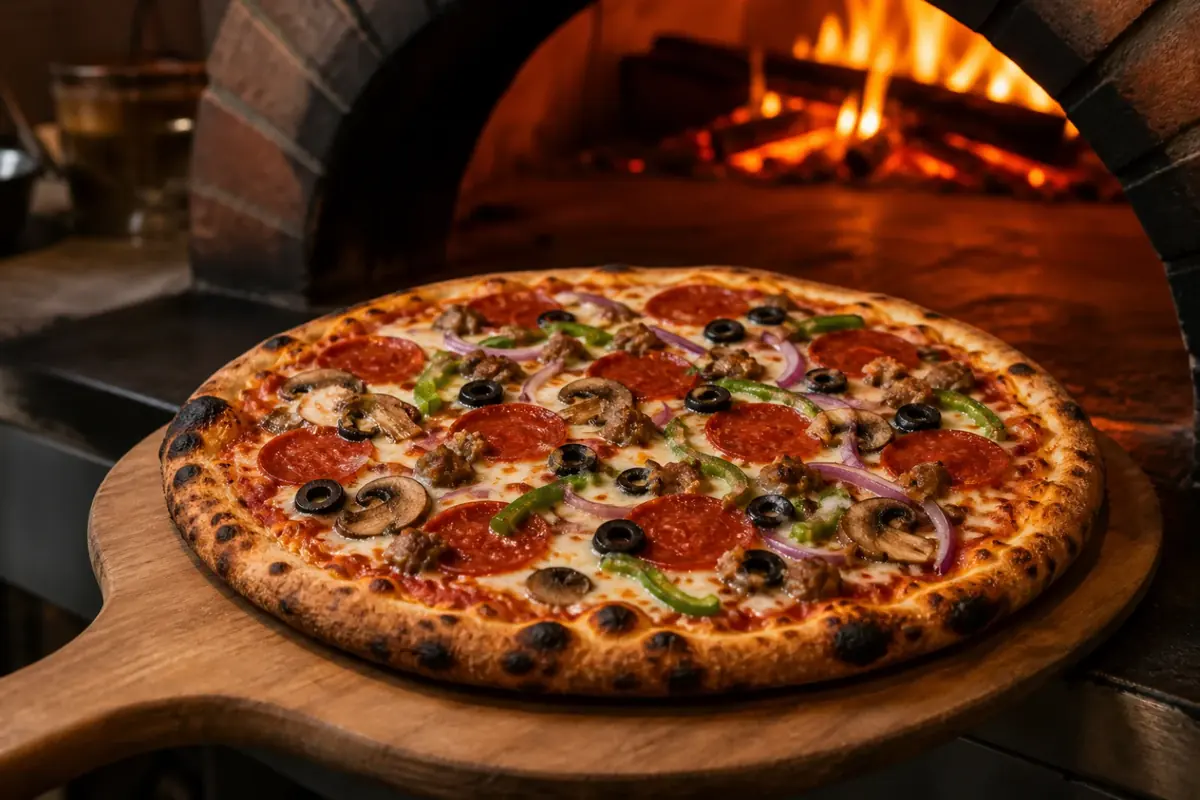
Supreme pizza is defined by variety, but adding more of every topping usually produces a heavy, damp center. This recipe keeps the familiar combination—pepperoni, Italian sausage, bell pepper, onion, mushrooms, and black olives—while limiting each ingredient to a useful amount. You get different flavors in every slice without burying the dough.
The recipe includes a same-day dough sized for one 12-inch pizza. It can be baked on a preheated pizza stone or steel for a crisper underside, or on a hot inverted baking sheet when specialized equipment is not available. The exact bake time depends on the surface and your oven, so the instructions include visual and structural doneness cues.
Cook raw sausage before it goes on the pizza, drain wet toppings, and slice the vegetables thinly. Those steps matter more than arranging every topping in a particular order: excess grease and water are the main reasons a fully loaded pizza turns soft rather than browned and firm.
The recipe
Supreme Pizza Recipe
Same-day pizza dough
- 180 grams bread flour, plus more for handling
- 117 grams lukewarm water, about 1/2 cup
- 1 gram instant yeast, about 1/4 teaspoon
- 4 grams fine salt, about 2/3 teaspoon
- 5 grams olive oil, about 1 teaspoon
- Semolina flour or additional bread flour, for the peel or baking sheet
Quick tomato sauce
- 80 grams crushed tomatoes, about 1/3 cup
- 1 teaspoon olive oil
- 1/4 teaspoon dried oregano
- 1/8 teaspoon garlic powder
- Small pinch of fine salt
Supreme pizza toppings
- 113 grams low-moisture whole-milk mozzarella, shredded, about 1 cup loosely packed
- 28 grams fully cooked and drained Italian sausage, crumbled, about 1 ounce; start with roughly 1 1/2 ounces raw sausage if cooking it yourself
- 28 grams sliced pepperoni, about 12 to 16 small slices
- 30 grams green bell pepper, cut into thin, short strips, about 1/4 cup
- 25 grams yellow or red onion, very thinly sliced, about 1/4 cup
- 25 grams cremini or white mushrooms, thinly sliced, about 1/4 cup
- 2 tablespoons drained sliced black olives
- 1 tablespoon finely grated Parmesan, optional
- 1 teaspoon olive oil, optional, for brushing the rim
Method
- Make the dough. Combine the bread flour, water, instant yeast, salt, and olive oil in a medium bowl. Stir until no dry flour remains. Knead on a lightly floured counter for 5 to 7 minutes, or work the dough in the bowl with repeated folds, until it feels smoother and stretches several inches before tearing. It may remain slightly tacky, but it should not flow or stick heavily to clean hands.
- Let the dough rise. Shape the dough into a ball and place it in a lightly oiled, covered bowl. Leave it at room temperature for 75 to 105 minutes, until visibly puffy and roughly doubled in volume. A cool kitchen may require another 20 to 40 minutes. If the dough springs back sharply when pressed, give it more time; dough that has relaxed will hold a shallow indentation.
- Cook the sausage safely. If starting with raw Italian sausage, remove it from its casing and crumble it into a skillet over medium heat. Cook until no raw sections remain and the center of the largest pieces reaches 160°F. Transfer it to a paper-towel-lined plate and let it cool. Wash the skillet, utensils, cutting board, counter, and your hands after contact with raw meat. Measure 28 grams, or about 1 ounce, of cooked sausage for the pizza.
- Mix the sauce. Stir together the crushed tomatoes, olive oil, oregano, garlic powder, and salt. Do not cook the sauce. If the tomatoes appear unusually watery, spoon off some of the loose liquid before measuring; the sauce should spread easily without running across the dough.
- Preheat the oven and baking surface. Place a pizza stone or steel on a rack in the upper-middle third of the oven and preheat to 500°F, or the highest temperature permitted by the equipment manufacturer, for at least 45 minutes. For an inverted heavy baking sheet, preheat the oven and sheet to 475°F for at least 25 minutes. Keep the hot surface level and leave enough room to launch the pizza safely.
- Prepare the toppings. Slice the pepper, onion, and mushrooms thinly so they can soften during the short bake. Pat the mushrooms and drained olives dry. Separate clumps of mozzarella and sausage before assembly. Have every topping ready before stretching the dough; a topped pizza becomes harder to move the longer it sits on a peel.
- Stretch the crust. Lightly flour the counter and press the risen dough into a disk, leaving a slightly thicker rim. Lift and rotate the dough over your knuckles, or stretch it gently on the counter, until it forms an approximately 12-inch round. If it repeatedly contracts, cover it and wait 10 minutes before continuing. Do not force a resistant dough, which can produce thin spots or tears.
- Assemble with open space. Dust a pizza peel with semolina or flour and place the stretched dough on it. Spread the sauce over the dough, stopping about 3/4 inch from the edge. Add the mozzarella in an even but loose layer. Distribute the sausage, pepperoni, bell pepper, onion, mushrooms, and olives across the pizza, leaving visible patches of cheese between them. Add Parmesan and lightly brush the exposed rim with olive oil, if using. Shake the peel gently to confirm that the pizza slides; loosen any stuck area with a thin spatula and more flour.
- Bake the pizza. Slide the pizza onto the preheated stone or steel. Bake for 7 to 10 minutes, rotating it once if one side browns faster. On an inverted baking sheet at 475°F, expect approximately 11 to 15 minutes. The pizza is ready when the rim is browned, the cheese is fully melted with scattered golden areas, and the underside feels firm rather than soft when lifted with a peel or spatula. If the top needs more color after the bottom is done, move the pizza to a higher rack for 30 to 60 seconds while watching closely.
- Rest, cut, and serve. Transfer the pizza to a wire rack for 2 minutes so steam does not soften the bottom, then move it to a cutting board. Wait another 2 to 3 minutes before slicing. This brief rest lets the melted cheese settle and reduces topping drag when the wheel or knife passes through the pizza.
Equipment and oven setup
Useful equipment includes a mixing bowl, digital scale or measuring cups, skillet, instant-read food thermometer, pizza peel or rimless baking sheet, pizza stone or steel, and a wheel or sturdy knife. A scale makes the small dough quantities easier to repeat, but the volume measurements will still produce a workable crust.
A stone stores heat and helps draw moisture from the underside. A steel transfers heat more quickly and can brown a thin crust faster, so begin checking near the low end of the stated range. An inverted heavy baking sheet has less stored heat, but preheating it still gives the dough a stronger start than placing the pizza on a cold pan.
Confirm the maximum permitted temperature for your stone, steel, baking sheet, and oven accessories. Avoid sudden temperature changes with a stone, and never put a hot stone on a wet or cold surface. If launching an uncooked pizza feels uncomfortable, shape and assemble it on a room-temperature, lightly oiled sheet pan instead; bake at 475°F for about 13 to 18 minutes, checking the underside before removing it.
- Use the upper-middle rack when you need stronger top browning without placing the pizza directly beneath the broiler.
- Keep oven mitts, the landing rack, and a clear counter ready before launching the pizza.
- Do not overload the peel with flour. A thin dusting prevents sticking; excess flour can scorch and taste bitter.
How to keep a supreme pizza from becoming soggy
The topping quantities are deliberately restrained. One-quarter cup each of peppers, onions, and mushrooms may look modest in separate bowls, but together they form nearly a full cup of vegetables once olives are included. Adding substantially more can insulate the center of the pizza and release enough water to delay browning.
Thin slicing is as important as quantity. Thick mushroom pieces retain water, while large pepper and onion pieces may remain firm during a short, hot bake. Cut the vegetables no thicker than about 1/8 inch. Pat washed vegetables dry before slicing, and do not salt them in advance because salt draws moisture to the surface.
Low-moisture mozzarella is more predictable here than fresh mozzarella packed in liquid. Fresh cheese can still be used, but drain it thoroughly, tear it into small pieces, and use about 85 grams rather than 113 grams. Leave wider gaps between the pieces so moisture can evaporate.
Cooked sausage should be well drained, and pepperoni should be spread across the pizza rather than stacked. A few small cups of rendered pepperoni fat are normal, but large greasy pools suggest that the meat was concentrated too heavily in one area.
- Use thick crushed tomatoes rather than a loose tomato purée.
- Keep sauce to about 1/3 cup for a 12-inch pizza.
- Leave visible cheese and sauce between toppings.
- Rest the baked pizza on a rack before transferring it to a flat board.
Substitutions and adjustments
Bread flour provides a sturdy base for the topping load. All-purpose flour can replace it gram for gram, though the dough may feel softer and the baked crust may have less chew. Add only enough handling flour to prevent severe sticking; repeatedly adding flour during kneading can make the crust dense.
For a meat-free supreme pizza, omit the pepperoni and sausage rather than replacing both with a large volume of vegetables. Add 2 tablespoons each of sliced pickled jalapeños and chopped artichoke hearts, both well drained, or use a modest amount of cooked plant-based sausage according to its package directions.
Red bell pepper can replace green pepper for a sweeter flavor. Kalamata olives may replace black olives, but use them sparingly because they are usually saltier. Provolone can replace up to half of the mozzarella. If using a salty cheese or cured meat, taste the sauce before adding its pinch of salt.
The dough can also support one or two extra accents, such as 1 tablespoon of pickled jalapeño slices or a pinch of red pepper flakes. Treat these as replacements for part of the listed topping volume, not as another full layer.
- For turkey or chicken sausage, cook raw ground poultry sausage to 165°F before using it.
- For a milder pizza, use sweet Italian sausage and omit red pepper flakes.
- For stronger browning, shred cheese from a block; some packaged shredded cheeses melt differently because of their anti-caking coating.
Make-ahead options
The sauce can be mixed up to 3 days ahead and refrigerated in a covered container. The vegetables can be sliced a few hours before baking, but keep them refrigerated and pat away collected moisture before assembly. Cooked sausage can also be prepared in advance and chilled promptly.
For a slower dough schedule, reduce the instant yeast to a scant 1/8 teaspoon. Mix and knead the dough, cover it, and refrigerate it for 18 to 48 hours. Take it out 60 to 90 minutes before stretching. The dough is ready when it has lost its refrigerator chill, feels flexible, and no longer snaps back forcefully.
Individual dough balls can be frozen in lightly oiled airtight containers after a brief 20- to 30-minute room-temperature rest. Thaw overnight in the refrigerator, then bring the dough to room temperature before stretching. Freezing can slightly weaken the dough, so handle it gently and avoid pulling one area much thinner than the rest.
- Do not assemble the whole pizza far in advance; sauce begins soaking into raw dough.
- Keep prepared meat, cheese, sauce, and vegetables refrigerated until needed.
- Bring cold dough out early enough to relax, but do not leave perishable toppings at room temperature with it.
Storage and reheating
Refrigerate leftover pizza within 2 hours of baking, or within 1 hour when the surrounding temperature is above 90°F. Store slices in a covered container in a refrigerator held at 40°F or below and use them within 3 to 4 days. Freeze slices if they will not be eaten within that period.
For a crisp underside, reheat slices in a covered skillet over medium-low heat for 4 to 7 minutes. Add a few drops of water to an empty area of the pan before covering, taking care that the water does not touch the crust. The trapped steam warms the top while the pan restores some firmness underneath.
Slices can also be reheated on a baking sheet in a 375°F oven for 7 to 12 minutes. An air fryer generally works at 350°F for about 3 to 6 minutes, although capacity and heating intensity vary. USDA guidance lists 165°F as the safe reheating temperature for leftovers; check the center of a thick or heavily topped slice with a food thermometer.
Microwaving is the fastest option but produces a softer crust. Heat one slice in short intervals until hot throughout, then let it stand briefly because toppings can develop concentrated hot spots. Do not reheat the same leftovers repeatedly; warm only the amount you plan to eat.
- Cool and refrigerate leftovers promptly rather than leaving the pizza out for extended grazing.
- Use shallow containers or separate slices so they chill quickly.
- Discard leftovers with mold, an unusual odor, or an uncertain storage history; reheating does not reverse spoilage.
Troubleshooting supreme pizza
If the center is pale and floppy, the likely causes are excess toppings, watery sauce, under-preheating, or a crust that was stretched too thin in the middle. Reduce the vegetable load, drain the ingredients more thoroughly, and give the baking surface its full preheat next time. For the current pizza, return individual slices directly to a hot rack or skillet to firm the underside.
If the crust burns before the cheese browns, move the baking surface one rack higher, lower the oven by 25°F, or shorten the preheat slightly when using steel. Flour left on the peel can also blacken quickly. Brush loose flour from the work surface and use only the amount needed for a clean launch.
If the pizza sticks to the peel, work quickly and shake the peel immediately after placing the dough on it. Before launching, slide a thin spatula under the stuck point and scatter a little semolina beneath it. A badly stuck pizza is safer to reshape on an oiled sheet pan than to force onto a hot stone.
If the dough tears during stretching, pinch small holes closed and let the dough rest for 5 to 10 minutes. Persistent tearing can indicate under-kneading, insufficient rest, or a very thin center. Press outward from the middle while preserving a slightly thicker rim, and rotate the dough frequently so one section does not take all the stretching.
If the toppings slide off when sliced, the pizza may have too much sauce, the cheese may be concentrated beneath a heavy topping layer, or it may have been cut immediately after baking. Use the listed sauce amount, distribute toppings loosely, and allow the pizza to rest before cutting.
- Pale top, firm bottom: move the pizza higher for a brief finish.
- Brown top, soft bottom: bake lower or use a more thoroughly preheated surface.
- Tough dough that shrinks: cover and rest it for another 10 minutes.
- Wet patches: reduce or dry the topping responsible rather than extending the bake until the rim burns.
Recipe questions
Questions about this recipe
What normally comes on a supreme pizza?
The combination varies, but many American supreme pizzas include pepperoni, Italian sausage, bell pepper, onion, mushrooms, and olives over tomato sauce and mozzarella. Some versions add ham, bacon, beef, or hot peppers. This recipe uses the first group because it provides a clear mix of cured meat, cooked sausage, fresh vegetables, and briny olives without requiring an excessive topping load.
Should vegetables be cooked before putting them on supreme pizza?
Not when they are sliced thinly and used in the listed quantities. Bell pepper, onion, and mushrooms will soften during a hot bake while retaining some texture. If you prefer very soft vegetables or your oven is limited to a lower temperature, sauté them briefly and cool them first. Drain any liquid before topping the pizza.
Can raw sausage cook completely on the pizza?
Do not rely on the short pizza bake to cook raw sausage safely and evenly. Crumble and cook it separately, verify that ground beef or pork sausage reaches 160°F, drain it, and then add it to the pizza. Raw poultry sausage needs to reach 165°F.
Can I use store-bought pizza dough?
Yes. Use about 280 to 320 grams of dough for one 12-inch pizza. Let refrigerated dough sit in a covered, lightly oiled container until it is flexible enough to stretch, usually 60 to 90 minutes depending on its temperature and the room. Follow any handling directions provided with the dough.
Why does my supreme pizza release water after baking?
Mushrooms, peppers, fresh mozzarella, loose tomato sauce, and crowded toppings can all release water. Dry the vegetables, use low-moisture cheese, choose thick crushed tomatoes, and preserve gaps between toppings. A thoroughly preheated baking surface also helps the bottom set before released moisture can soak into it.
Can this pizza be made without a stone, steel, or peel?
Yes. Stretch the dough directly on a lightly oiled room-temperature sheet pan, add the toppings, and bake at 475°F for approximately 13 to 18 minutes. The bottom may be less crisp than one baked on a preheated surface, but it should still become browned and structurally firm. A second inverted sheet pan can act as a peel if it has a flat, rimless side.
Sources and further reading