
Pizza Informer recipe
New York-Style Cheese Pizza for a Home Oven
A large, thin, foldable cheese pizza adapted for a hot home oven with cold-fermented dough, simple tomato sauce and low-moisture mozzarella.
Jump to recipe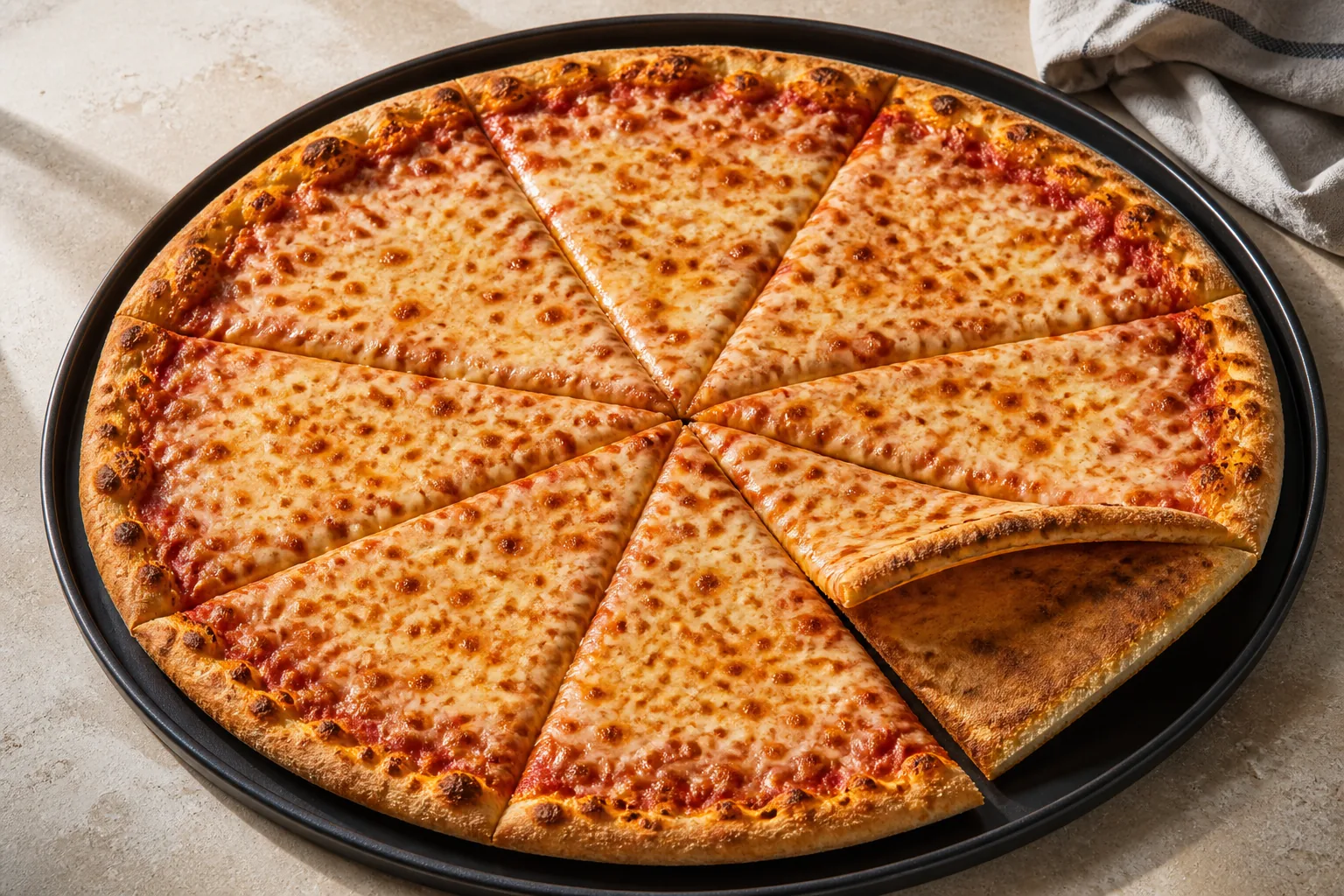
A home oven cannot reproduce every deck-oven condition, but it can produce a thin, crisp-chewy pizza with a broad slice and restrained topping. A steel gives the strongest bottom heat; a stone also works with a longer preheat.
The dough uses baker's weights and a 24- to 72-hour cold fermentation. Plan the schedule first, and use visual cues at the bake rather than forcing a fixed minute count.
The recipe
New York-Style Cheese Pizza for a Home Oven
Cold-fermented dough
- 300 g bread flour (100%)
- 189 g cool water (63%)
- 6 g fine salt (2%)
- 3 g sugar (1%)
- 1 g instant yeast (0.33%)
- 6 g olive oil (2%)
Sauce
- 140 g canned whole peeled tomatoes, drained
- 1/4 teaspoon fine salt
- 1/4 teaspoon dried oregano
- 1 small garlic clove, finely grated
- 1 teaspoon olive oil
Topping and launch
- 170 g whole-milk low-moisture mozzarella, coarsely grated and chilled
- 15 g finely grated Parmesan
- 1 teaspoon olive oil
- 1 tablespoon fine semolina or flour for the peel
Method
- Mix the dough. Stir flour, water, salt, sugar and yeast until no dry flour remains. Rest 15 minutes, knead until moderately smooth, then knead in the oil.
- Begin fermentation. Cover and rest 30 minutes at room temperature. Form a tight ball, place in a lightly oiled covered container with expansion room, and refrigerate 24 to 72 hours.
- Warm the dough. About 2 hours before baking, remove the dough from the refrigerator. Keep covered until relaxed but not puffy and fragile.
- Make the sauce. Crush the drained tomatoes by hand or pulse briefly. Stir in salt, oregano, garlic and oil. Keep chilled until assembly.
- Preheat thoroughly. Place a baking steel or stone on a middle-upper rack. Heat the oven at 500 to 550°F, within equipment limits, for 45 to 60 minutes.
- Open the dough. Dust the peel lightly. Press gas from the centre while leaving a narrow rim, then stretch to about 14 inches without rolling. Rest 10 minutes if it resists.
- Top. Spread 110 to 120 g sauce in a thin spiral. Add mozzarella and Parmesan evenly, leaving some sauce visible. Drizzle with 1 teaspoon oil.
- Bake. Shake the peel to confirm release, then launch. Bake 7 to 11 minutes, rotating once if needed, until the underside is well browned, the rim is coloured and the cheese has small browned spots.
- Rest and cut. Move to a rack for 2 minutes so steam does not soften the base, then transfer to a board and cut into six or eight slices.
Why the formula works in a home oven
Moderate hydration makes a broad pizza easier to launch while retaining enough water for a chewy crumb. A little oil and sugar support browning during a bake that is longer than a commercial deck-oven bake.
The cold rest develops flavour and makes the schedule predictable. Yeast quantity is deliberately small because time, not a large dose of yeast, drives the fermentation.
Shaping and topping discipline
Press the centre before lifting the dough, then stretch over the backs of the hands. A pin is efficient but removes the gas that creates the raised edge.
Too much sauce or cheese insulates the centre. The listed amounts leave enough exposed surface for moisture to escape.
- Keep sauce and cheese cold until assembly.
- Top only after the dough slides on the peel.
- Repair a thin spot by pinching; do not fold a heavy patch over it.
Read the bake
A browned top with a pale base means the surface needs more stored heat or a lower rack. A dark base with pale cheese means the steel is aggressive relative to top heat; move higher or reduce the preheat temperature slightly.
The finished centre should lift as one sheet rather than droop with raw dough. Some fold is characteristic; gumminess is not.
Storage and next-day reheating
Refrigerate leftovers within two hours and keep them covered. USDA guidance lists pizza for three to four refrigerated days.
Reheat a slice in a skillet over medium-low heat until the base crisps, then cover briefly to warm the cheese. An oven or toaster oven also works; a microwave softens the crust.
Recipe questions
Questions about this recipe
Can I use all-purpose flour?
Yes, though the dough may be slightly less chewy and more delicate. Hold back about 5 g water initially if your flour is relatively weak.
Can I skip the cold fermentation?
A same-day dough is possible, but it needs a different yeast amount and schedule. Do not simply warm this formula for a few hours and expect the same maturity.
Why does my cheese release oil?
Excess cheese, very high-fat cheese or a long bake can cause oiling. Use chilled whole-milk low-moisture mozzarella in the listed amount and avoid finely shredding it.
Sources and further reading